
Winter Activities for Toddlers: A Snow Day Plan for Inside and Out
Updated October 25, 2026
A snow day with a toddler sounds magical until you are standing in the cold, one mitten is missing, and your toddler is crying because their hands hurt. The difference between a great snow day and a miserable one is almost never the snow. It is the plan. This page gives you a full snow day plan for toddlers: what to do outside, when to come in, how to warm up, what to do in the afternoon, and what to do when there is no snow at all.
Quick answer: Run a snow day in three blocks. Block one is outside: snow play for 30 to 45 minutes in mild weather. Block two is the warm-up: dry clothes, a warm drink, and a calm indoor activity. Block three is the afternoon energy burn indoors. Keep the blocks short, watch hands and cheeks for cold, and never try to stretch one block to fill the whole day.
The snow day plan, hour by hour
Here is the shape of the day. Times are a guide, not a schedule to stress over. Move a block earlier or later and the day still works.
| Block | When | What happens |
|---|---|---|
| 1. Outside snow play | Morning, after breakfast | Snow painting, snow angels, a mini snowman, scooping and pouring, and a short sled pull. Come in before anyone gets cold. |
| 2. Warm-up | Late morning | Wet clothes off, dry clothes on, warm drink and snack, then a calm activity like a snow sensory bin or a winter book. |
| 3. Afternoon energy burn | After nap or quiet time | Indoor obstacle course, indoor snowball toss, a blanket fort, and a dance party to use up the rest of the energy. |
| 4. Quiet evening | Before bed | Winter story, sticker scene, and an early, calm bedtime. Snow days are tiring, even when they look easy. |
Outside snow play: 7 ideas that work for toddlers
Keep the outdoor block short and full of small wins. Toddlers do not need a big project in the snow. They need things they can do with their hands right now.
1. Snow painting
Fill squeeze bottles and spray bottles with water and a few drops of food colouring. Your toddler paints pictures in the snow, writes their name, or just sprays colours everywhere. Use washable food colouring and old clothes, and keep the bottles in a bag so cold hands can swap them easily.
2. Snow angels
Lie down in fresh snow, move arms and legs, and stand up carefully to see the angel. Toddlers love this one because the result is instant and it looks like magic. Do it on soft, deep snow, and brush the snow off backs and hoods straight away.
3. A mini snowman, not a big one
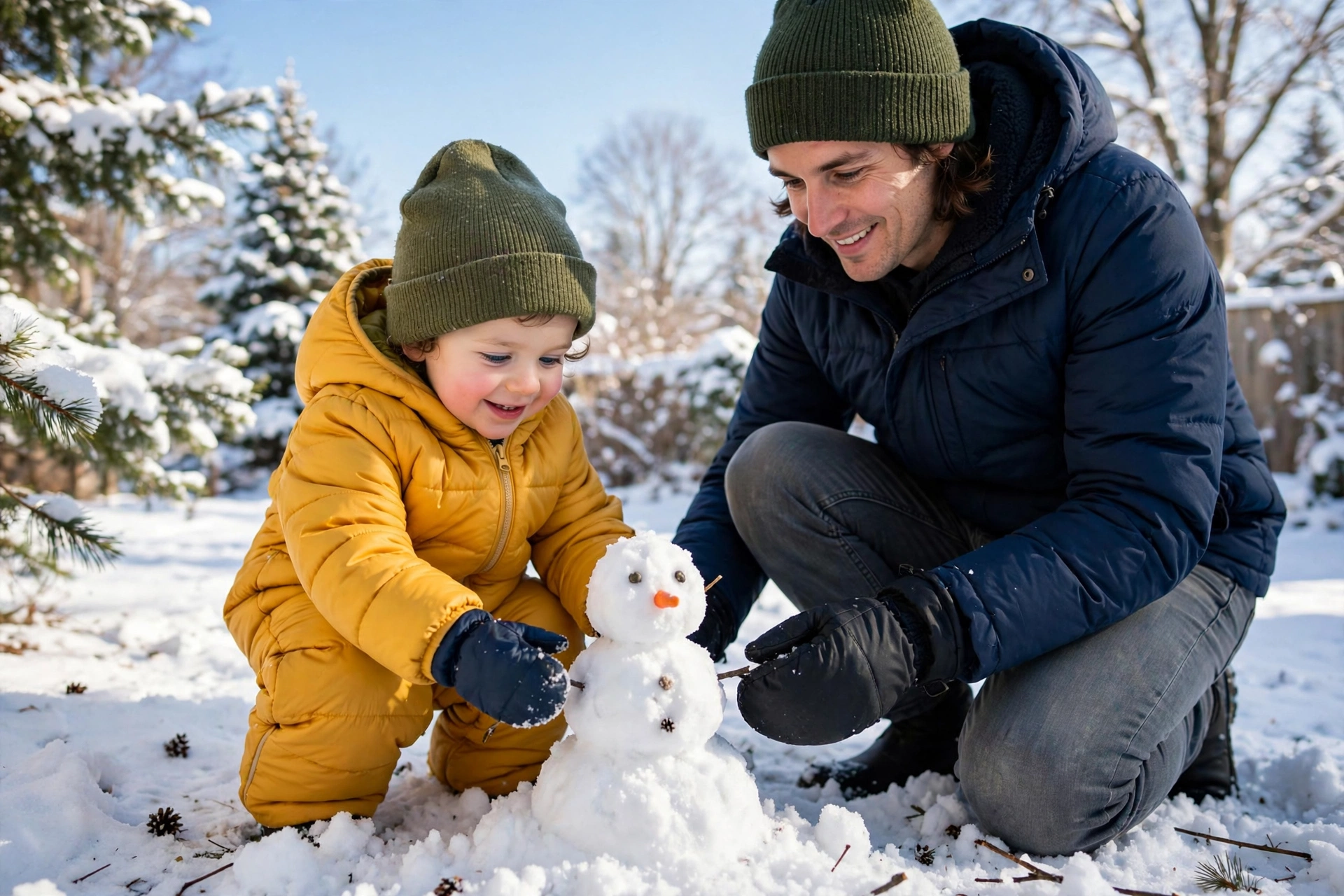
A full-size snowman is too much rolling and lifting for a toddler. Build a small one instead: three snowballs the size of an orange, stacked with help, then a face made from buttons, a carrot nose, and stick arms. Your toddler can do almost all of it, and it is finished before cold hands give up.
4. Scoop and pour
Give your toddler a bucket, a small shovel, and a few cups. Scooping snow and pouring it from one container to another is endlessly satisfying at this age, and it builds coordination without any instructions. This is the activity that buys you the most outdoor time.
5. Animal tracks
Walk slowly and look for tracks in the snow: birds, dogs, cats, and squirrels all leave different prints. Ask your toddler who made them. Take photos and match them to animal pictures inside later. It turns a walk into a treasure hunt.
6. A gentle sled pull
On flat ground, pull your toddler in a sled, or let them sit in it while you walk around the garden. For a small slope, sit behind them and hold on. Keep slopes gentle, away from roads and trees, and skip sledding entirely on icy days.
7. Soft snowball toss
Make snowballs from soft snow and throw them at a target: a bucket, a tree trunk, or a drawn circle in the snow. Never throw snowballs at faces, and skip this game when the snow is icy and hard. Soft snow only, always.
Want winter days planned for you?
The No-Screen Toddler Rescue Kit has 115 print-and-go activities sorted by the exact moments parents struggle with, including snow days, sick days, and long indoor afternoons. 89 pages, 28 printable activity cards, made for ages 2 to 5.
Instant download. Print it once, use it every day.
Cold safety: how long, and what to wear
This section matters more than any activity on the page. Toddlers lose body heat faster than adults, and they will not always tell you they are cold until they are upset.
How long outside
- Around freezing, calm and dry: 30 to 45 minutes is a good block, then a warm-up break inside.
- Well below freezing, windy, or wet: 15 to 20 minutes, then inside. Wind and wet clothes shorten safe time fast.
- Signs to go in now: very red or white cheeks, fingers, or toes, shivering that will not stop, clumsiness, or sudden grumpiness. Do not negotiate. Warm hands first, play later.
What to wear
Layers work better than one thick coat. Start with a warm base layer, add an insulating middle layer, then a waterproof snowsuit on top. Add a hat that covers the ears, waterproof mittens (mittens keep small hands warmer than gloves), warm socks, and waterproof boots. Put sunscreen on the face and lip balm on lips, because snow reflects sunlight and burns happen on bright winter days too.
The mittens trick
If your toddler pulls mittens off, try mittens with a long cuff tucked under the snowsuit sleeve, and let them choose between two pairs. Mittens on a cord through the sleeves cannot fall off in the snow. If mittens still fail, keep outdoor time short and warm their hands in yours every few minutes. For more cold-weather dressing help, our indoor toddler activities guide covers the days when going out is not worth it at all.
The warm-up block
Coming inside is part of the fun, not the end of it. Make the warm-up a ritual and your toddler will stop fighting the move indoors.
8. Cocoa and a story
Wet clothes off first, dry clothes on, then a warm drink and a snack. Warm milk with cocoa, or just warm milk with a marshmallow to count in, works well. Sit down together for a winter book while everyone warms up. This ten minute pause resets the whole day.
9. Bring the snow inside
Fill a shallow tray with clean snow and bring it indoors. Your toddler can scoop it, paint it with coloured water, and watch it melt. It is the same sensory joy as outside, without cold hands. Put a towel under the tray and a timer on the activity, because melting snow gets wet fast.
10. Ice melting experiment
Freeze small toys into a bowl of water overnight. In the morning, give your toddler warm water in a squeeze bottle and a spoon, and let them free the toys as the ice melts. It is science, fine motor practice, and a calm activity in one, and it buys you a quiet half hour.
11. Mitten sort
Put out a pile of mittens, socks, and hats, and let your toddler match the pairs and sort by size or colour. It sounds too simple, but sorting is one of the most absorbing toddler activities there is, and it quietly builds early maths skills.
Snow days are long days
When the whole day is indoors, one activity never lasts. The Rescue Kit gives you 115 ideas sorted by moment, so the afternoon has a plan too, not just the morning. 89 pages, 28 printable activity cards, ages 2 to 5.
Instant download. Print it once, use it every day.
Afternoon energy burn indoors
After a nap or quiet time, toddlers still have energy to burn, and the house still has walls. These activities use that energy without needing the garden.
12. Indoor obstacle course
Couch cushions to climb over, a taped line to walk along, a tunnel made from chairs and a blanket, and a pillow to jump onto. Keep it to four or five stations and run it twice. Our rainy day toddler activities guide has a full version of this course.
13. Indoor snowball toss
Crumple white paper or roll white socks into balls, and throw them into baskets at different distances. It is the same throwing game as outside, but warm. Add a point for each basket and your toddler will play it far longer than you expect.
14. A blanket fort with twinkle lights
Drape blankets over chairs, add a string of battery lights, and bring in books and a snack. A fort turns an ordinary afternoon into an event, and it doubles as a quiet corner when the energy finally runs out.
15. Winter dance party
Put on fast music and dance like falling snow, stomping reindeer, and waddling penguins. Movement games with animal actions are the fastest way to tire a toddler out happily indoors.
No snow? The indoor winter plan
Many families get winter without snow, or snow that never settles. The winter feeling does not need real snow. These five ideas bring it indoors.
16. Fake snow sensory bin
Mix baking soda with a little hair conditioner until it holds together like snow, or just use cotton balls, white pom-poms, and scoops in a bin. Toddlers can scoop, pour, and bury small toys in it for ages. Keep it on a tray, because fake snow travels.
17. Cotton-ball snowy picture
Draw a house on paper, let your toddler paint white glue on the roof and the ground, then press cotton balls on top. It makes a soft, snowy scene they can hang up, and it is the same activity schools use for a reason: it works.
18. Freezer ice play
Freeze water in muffin trays with a drop of food colouring and a small toy in each cup. Pop the coloured ice out and let your toddler paint with it on paper as it melts, or sort the ice cubes by colour into bowls. All the cold fun, none of the cold weather.
19. Paper snowflakes, toddler style
Fold paper and let your toddler snip the edges with safety scissors, then unfold to reveal the snowflake. For younger toddlers, you fold and cut, and they unfold and decorate with stickers. Hang them in the window for an instant winter display.
20. Winter books and sticker scenes
Read The Snowy Day by Ezra Jack Keats or The Mitten by Jan Brett, then set out a sticker scene: a paper background, snowflake stickers, and animal stickers to place. Story plus stickers is a calm, complete activity that needs almost no setup.
One kit, every winter day
From the first snow to the last cold week, the Rescue Kit has a plan for the day you are actually having: outside play, warm-up time, and the long indoor afternoon. 115 activities, 28 printable cards, ages 2 to 5.
Instant download. Print it once, use it every day.
Frequently asked questions
How long can a toddler play outside in the snow?
In mild winter weather around freezing, 30 to 45 minutes is a good outdoor block for most toddlers, followed by a warm-up break inside. When it is well below freezing, windy, or wet, shorten that to 15 to 20 minutes. Watch cheeks, fingers, and toes: if they look very red or your toddler says they hurt, it is time to go in, even if they protest.
What should a toddler wear to play in the snow?
Layers: a warm base layer, an insulating middle layer, and a waterproof snowsuit on top, plus a hat that covers the ears, waterproof mittens, warm socks, and waterproof boots. Mittens keep small hands warmer than gloves. Add sunscreen on the face and lip balm, because snow reflects sunlight.
My toddler refuses to wear mittens. What works?
Try mittens with a long cuff that tucks under the snowsuit sleeve, and let your toddler choose between two pairs. Some toddlers accept mittens more easily if they put them on themselves, or if the mittens are attached to a cord through the sleeves so they cannot fall off. If they still refuse, keep outdoor time short and warm their hands often.
What if there is no snow where we live?
The whole indoor winter plan on this page works without real snow: fake snow sensory bins, cotton-ball snowy pictures, ice play from a freezer tray, and winter books. Toddlers enjoy the idea of winter even when the weather outside is warm.
Is it safe for toddlers to eat snow?
Fresh, clean snow from an untouched area is generally fine in tiny amounts, but avoid snow near roads, paths treated with salt, or places where animals walk. Never let a toddler eat yellow or dirty snow. If you want a snow treat, bring clean snow inside and pour a little juice over it instead.
How do I warm up a cold toddler after snow play?
Get wet clothes off straight away, dress them in dry warm clothes, and offer a warm drink and a snack. A warm bath works well, but skip very hot water on cold skin. If fingers or toes stay white, numb, or painful after warming up, call your doctor for advice.
What age can toddlers start sledding?
Toddlers can sled from around age 2 on a gentle slope, sitting with an adult or in a pull sled on flat ground. Keep slopes small, avoid anywhere near roads or trees, and always hold on. A helmet is a good idea once they start going down slopes on their own.
Sources and further reading
American Academy of Pediatrics (HealthyChildren.org) guidance on cold weather safety, frostbite prevention, and winter play for young children. UNICEF parenting resources on play and early learning at home.
If the day turns wet instead of snowy, our rainy day toddler activities guide has a full indoor day plan. When the cold keeps everyone inside all day, the indoor toddler activities guide covers big movement indoors. And for the festive side of winter, our Christmas activities for toddlers guide has the full December plan.