
15 Indoor Toddler Activities: Easy Screen-Free Ideas for Home
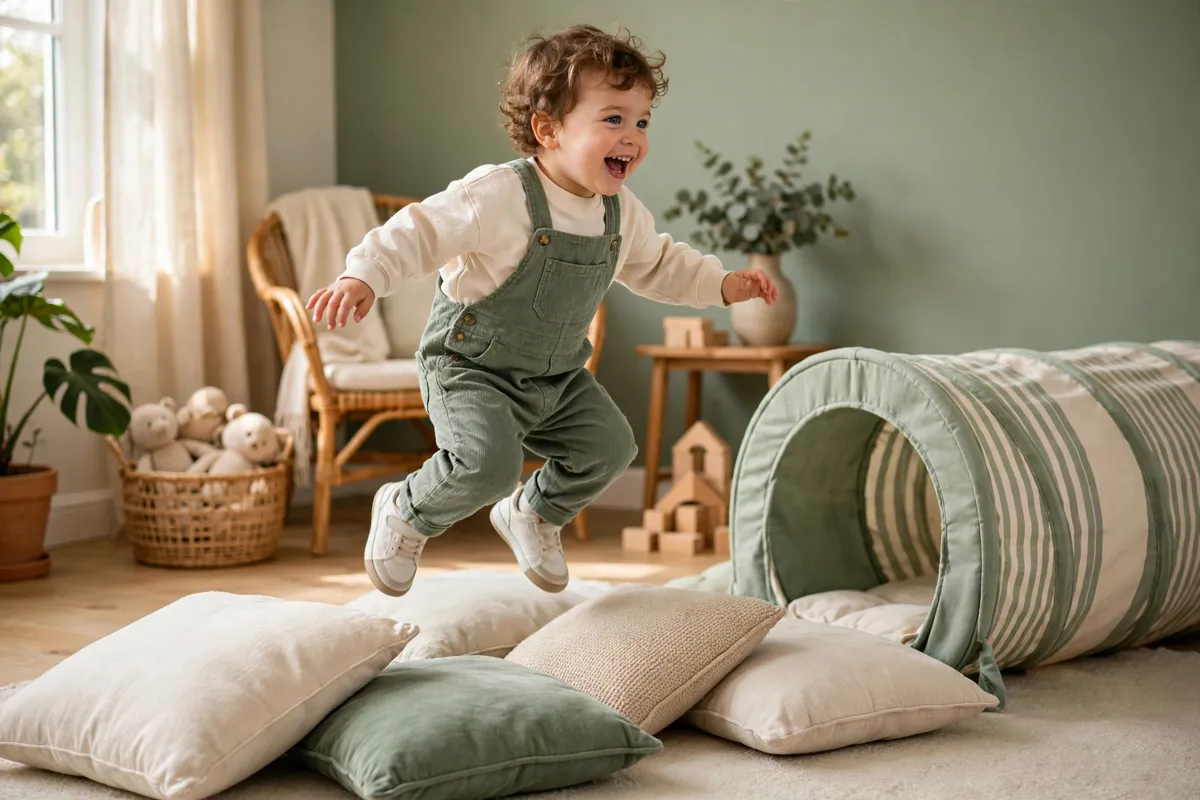
When you are stuck inside, you do not need a complicated craft table or a house full of new toys. These indoor toddler activities give ages 2 to 5 simple screen-free ways to move, build, sort, imagine, draw, and explore at home using materials you may already have.
Build an indoor activity rotation
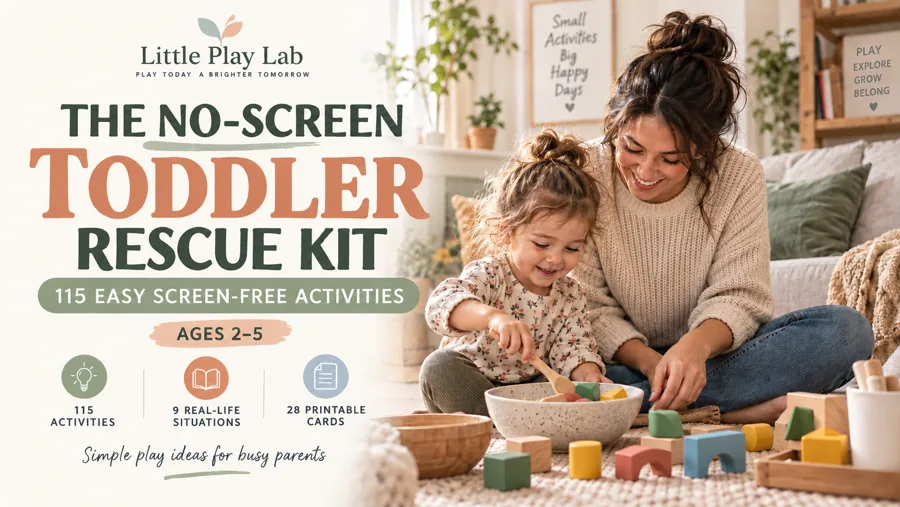
The No-Screen Toddler Rescue Kit gives you 115 screen-free activities for ages 2 to 5, so you can rotate ideas instead of repeating the same few games.
See the No-Screen Toddler Rescue Kit →Why simple indoor play can be enough
Indoor play does not have to mean creating a new project every hour. Young children can get a lot from ordinary materials and open-ended play. UNICEF describes free play as a chance for children to choose what interests them and explore in a safe environment. UNICEF Parenting has more guidance on supporting free play.
The American Academy of Pediatrics also highlights simple, low-cost materials such as boxes, blocks, paper, and household objects as useful starting points for play. HealthyChildren.org provides examples of screen-free activities that do not require expensive equipment.
Some of the ideas below may last five minutes, while others may turn into longer pretend-play sessions. That variation is normal. The goal is to give you useful options, not to guarantee a particular amount of independent play.
15 indoor toddler activities
Indoor Animal Walk
Clear a safe floor area and call out an animal. Your toddler can stomp like an elephant, waddle like a duck, crawl like a bear, or tiptoe like a cat.
Make it simple: Choose one animal at a time and let your child pick the next one.
Plastic Cup Tower
Give your toddler a small group of sturdy plastic cups and let them stack, line up, nest, and rebuild them.
Try: “Can you make a tiny tower?” Then try a taller one.
Big Paper Drawing
Put a large sheet of paper on a table or safe floor area and offer a few washable crayons. Your toddler can scribble, draw shapes, or make a pretend map.
Prompt: “Can you draw a house for Teddy?”
Stuffed Animal Picnic
Set up a blanket with two or three stuffed animals and a few safe pretend dishes or toy food. Your toddler can serve everyone lunch.
Ask: “Who is hungry?” and follow your child's story.
Color Sorting Game
Collect a few larger, age-appropriate objects and make two or three color groups. Socks, cloths, cups, or large toys can work.
For younger toddlers: Start with only two colors.
Indoor Treasure Hunt
Give your toddler one simple clue at a time: find something soft, something blue, something round, or something that starts with a particular sound.
Keep it safe: Use one room or clearly defined play area so the hunt does not lead toward stairs, kitchens, or other hazards.
Cardboard Box House
Turn a large cardboard box into a house, bus, shop, animal shelter, or anything else your toddler imagines.
No decorating required: A box and a blanket can be enough to start.
Cozy Reading Corner
Put two or three favorite books in a small basket beside a cushion or blanket. Your toddler can look at pictures, listen to a story, or retell a familiar book.
Add a buddy: Let a stuffed animal “listen” too.
Matching Sock Pairs
Put a small pile of clean socks on the floor and ask your toddler to find matching pairs.
Variation: Make one “sock family” at a time instead of giving them a huge pile.
Tape Road for Toy Cars
Use painter's tape to create a simple road on a safe floor or table. Add larger toy cars and let your toddler drive to different pretend destinations.
Story starter: “The delivery car needs to get to the house.”
Indoor Sound Hunt
Sit quietly for a moment and listen for sounds around the home. See if your toddler can notice a fan, clock, water, footsteps, a door, or sounds outside.
Take turns: You choose one sound, then your toddler chooses the next.
Three-Object Story
Choose three familiar objects, such as a toy animal, a cup, and a box. Start a very short story using all three and let your toddler decide what happens next.
Example: “The bear found a box. What was inside?”
Napkin Folding Helper
Give your toddler a few clean napkins and show them how to fold or stack them. Let them repeat the task or make their own pile.
Keep expectations low: The point is simple participation, not perfect folds.
Stuffed Animal Doctor
Let your toddler care for a stuffed animal using safe pretend materials. Teddy might need a blanket, a pretend check-up, or a quiet place to rest.
Ask: “What does Teddy need?” Then let your child decide.
Picture Book Hunt
Choose a picture book and ask your toddler to find something on each page: a dog, a ball, something red, something round, or a person wearing a hat.
Keep it relaxed: There is no need to turn it into a quiz. Follow your child's interest.
A practical note
You do not need a playroom for useful indoor play. A hallway can become a tape path, a table can become a sorting station and a cardboard box can become a shop or garage. Match the activity to the room you have, then alternate movement and seated play when the day is long. When an idea gets familiar, change one variable, colors, destination, pretend role or challenge, rather than replacing the whole setup.
Need more options for this exact moment?
The Rescue Kit gives you a larger activity rotation so you can choose an idea that fits the time, energy and situation you actually have.
Explore the 115-Activity Kit →Which indoor activity should you choose?
- Your toddler has lots of energy: start with animal walks or a simple tape road.
- You need a quieter activity: choose books, drawing, matching socks, or a picture-book hunt.
- Your child wants pretend play: try the stuffed animal picnic, box house, or teddy doctor.
- You have almost no supplies: use sound hunting, books, household sorting, or a three-object story.
- You only have a few minutes: choose something familiar that can start immediately, such as cups, crayons, or matching.
How to make indoor toddler activities easier
1. Do not set up the whole day
Choose one activity, put it in a safe play area, and see how your toddler responds. If it works, keep going. If interest disappears, switch to something else.
2. Use what you already have
Boxes, paper, socks, books, blankets, cups, and larger toys can all become play materials. UNICEF and the American Academy of Pediatrics both provide examples of simple, low-cost play rather than requiring elaborate equipment. UNICEF Parenting and HealthyChildren.org are useful references.
3. Make a clear play zone
For indoor movement and treasure hunts, define where the activity happens. Keep stairs, kitchens, bathrooms, cords, sharp objects, unstable furniture, and other hazards out of the play area.
4. Let the activity become something else
A cardboard box can become a bus. A stuffed-animal picnic can become a restaurant. A tape road can become an airport. Follow the new idea if your toddler changes the game.
5. Repeat favorites
You do not need fifteen new activities every day. If your child loves cup towers, use cup towers again. Familiar play often needs less explanation and less setup.
What if my toddler says “I'm bored” after five minutes?
That is normal. You can offer another choice, join for a few minutes, simplify the activity, or let your child move on to something else. The purpose of an activity list is to give you options when you need them, not to make every activity last a fixed amount of time.
It can also help to avoid presenting every activity at once. Keep a small rotation of familiar ideas and bring out another option when the first one has run its course.
Screen-free does not mean screen-shaming
Families make different choices about screens depending on their routines, circumstances, and children's needs. These indoor toddler activities are simply alternatives for the moments when you want a screen-free option.
The American Academy of Pediatrics recommends balancing screen use with other parts of children's lives, including play and family activities. UNICEF also provides screen-free activity ideas for young children. HealthyChildren.org and UNICEF Parenting provide further information.
Keep the ideas ready before you need them
The No-Screen Toddler Rescue Kit gives you 115 screen-free ideas for ages 2 to 5, built around everyday materials and real-life moments.
Get the No-Screen Toddler Rescue Kit →How we choose these activities
We prioritize everyday materials, simple setup and flexible play that caregivers can adapt to a child’s age and abilities. We avoid activities that depend on small loose parts and encourage active adult supervision whenever safety requires it.
Indoor, rainy day, or easy at home: which guide do you need?
This is the stuck inside page: any reason, any weather, with the emphasis on burning physical energy in rooms not built for it. If it is specifically raining and you want the day built around it, puddle suits, window watching and all, the rainy day activities guide takes that angle. If you are at home and simply want the simplest possible ideas with no prep at all, rain or shine, easy toddler activities at home is your page. Here we assume one thing: the walls are closing in and somebody needs to move.
Frequently Asked Questions
How do I tire my toddler out indoors?
Build a circuit and let them lap it: cushion mountain to climb, tunnel or blanket den to crawl through, a tape line to balance along, three star jumps at the end, repeat. Add dance freeze rounds and hallway bowling. Twenty minutes of circuit play, two or three times across the day, does the work of a much longer park visit for most toddlers.
What indoor activities work in a small apartment?
Think floor and vertical, not running distance: cushion courses, tape roads and balance lines, a pop up tunnel along one wall, fort building with the sofa, target games with soft balls into a box, and tidy up races. Small rooms handle movement fine when the movement is circuits and climbing rather than laps.
How do I stop indoor play wrecking the house?
Zone it: one active area with mats or a rug as the arena, everything breakable relocated for the day without drama, and tidy resets built into the games themselves (the circuit ends by carrying everything back). Contained chaos is the goal. A house that survives is a house where indoor play gets invited back tomorrow.
What indoor activities suit a 2 year old and a 5 year old together?
Open ended movement and pretend scale across ages: cushion courses, dens, dance games, shop and cafe pretend, and big cardboard boxes. Give the older child the builder and shopkeeper roles and the younger one the customer and climber roles, and the same setup serves both without either being bored.
How long can toddlers happily play inside all day?
A full indoor day is fine now and then, and some days it is simply the weather's decision. Most toddlers manage better with even fifteen minutes of fresh air somewhere in the day, a balcony, a doorstep puddle check, an errand on foot. If everyone is climbing the walls by 4 PM, it is usually a movement deficit, not an indoor failure: one more circuit usually fixes it.
What are calm indoor activities after the wild hour?
Land the plane deliberately: a snack, dimmer light, then seated play, drawing, puzzles, books, water play at the sink. The quiet activities guide on this site is the full landing strip. Alternating is the rhythm of a survivable indoor day: loud block, calm block, repeat, rather than hoping one mode lasts until bedtime.
What can my toddler do indoors with no toys at all?
Cushion mountains, cardboard box anything, tape lines on the floor, sock ball bowling, sink play with cups, dancing, den building with blankets and chairs, and helping jobs with real water and cloths. The best indoor equipment list ever written is a normal house, seen by a three year old.
For a more specific situation, explore toddler bored of all their toys? try toy rotation.
Sources and further reading
- UNICEF Parenting, “Screen-free activities for children”
- UNICEF Parenting, “21 learning activities for babies and toddlers”
- American Academy of Pediatrics / HealthyChildren.org, “10 No-Cost, Screen-Free Activities to Play with Your Preschooler”
- American Academy of Pediatrics / HealthyChildren.org, “Toddler Activity”