
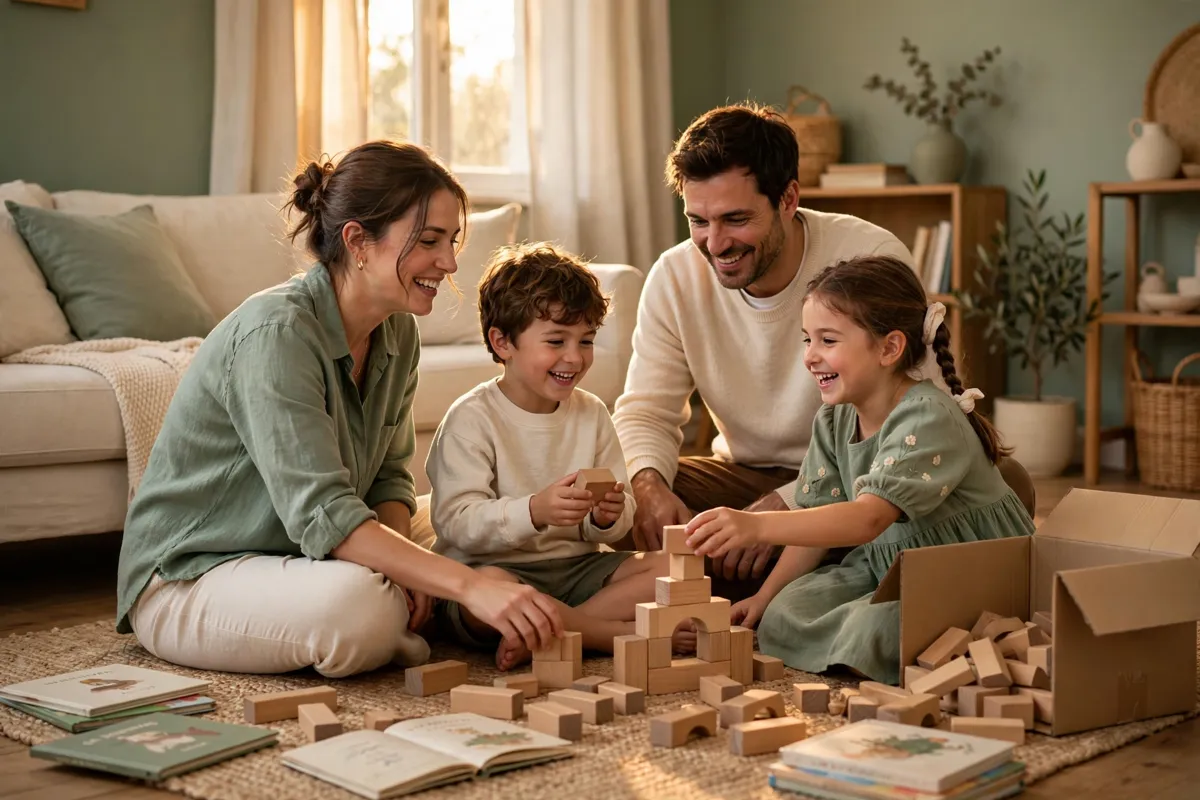
Sometimes you want to put a screen on because you genuinely need a few minutes. That's real life. Screen-free play does not have to mean making every minute of the day screen-free, and it does not require a perfectly prepared activity shelf.
What helps is having a small list of ideas you can reach for when your toddler says they're bored, you need to finish a meal, the weather keeps you indoors, or you simply want another option. UNICEF's screen-free activity guide includes ideas for toddlers and preschool-age children, and HealthyChildren.org highlights simple no-cost play ideas using familiar materials.
What makes a good screen-free toddler activity?
For busy parents, an activity is much easier to use when it passes a few practical tests:
- Low setup: You can get it ready without a long shopping list.
- Simple instructions: Your child can understand the basic idea quickly.
- Flexible: There is room for the child to change the activity.
- Easy to repeat: You can bring it back another day with a small variation.
- Age-appropriate: Materials and supervision match your child's age and abilities.
You also do not need to make every activity educational. Sometimes the win is simply giving a child something hands-on to explore while you get through a normal part of the day.
15 easy screen-free toddler activities
1. Cup Stacking Challenge
5-minute setupIndoorGive your toddler a small collection of large plastic cups and invite them to stack, knock down, rebuild, and try different towers. Add a simple challenge such as, "Can you make a tower taller than this one?" There is no need for a perfect tower.
2. Color Sorting
Low prepTable playPlace a few clearly different colors in front of your child and ask them to group matching items together. For a simple version, use colored paper and large household objects that are safe for your child's age. Older preschoolers can play "find something blue" around the room.
3. Paper Tear-and-Collage Play
CreativePaperGive your child scrap paper and a larger piece of paper as the base. Let them tear paper into pieces and arrange them into a collage. Try prompts such as "make a garden" or "make a rainbow," or leave it completely open-ended.
4. Kitchen Helper Sorting
Everyday activityParent nearbyWhen you're doing a household task, give your toddler a simple sorting job using safe, large items. They might group clean plastic containers by size or place large, lightweight items into separate piles. It can feel more natural when the activity resembles a real job.
5. Draw the Road
PaperQuiet playDraw simple roads, curves, circles, and parking spaces on a large sheet of paper. Let your toddler add roads and move large toy vehicles along them. Older preschoolers can design a whole little town.
6. Build a Cardboard House
Open-endedCardboardUse a clean cardboard box as a simple pretend-play space. It can become a house, shop, garage, boat, or anything your child imagines. The same box can become something different tomorrow.
7. Big-Object Treasure Hunt
MovementIndoorChoose a few large, safe objects or familiar toys. Hide them in easy-to-find places and give simple clues such as "Look near the sofa" or "Find the red one." Make hiding places obvious for younger toddlers.
8. Transfer and Pour Play
Hands-onWaterAt a safe play area, offer a small amount of water, a shallow container, and a few large cups. Let your toddler pour from one container to another. Use a washable surface and stay close. Never leave a young child unattended around water.
9. Match the Pairs
QuietSimple setupMake pairs of large picture cards, shapes, or other safe matching materials. Mix them up and invite your child to find the pairs. Start with only a few pairs and add more when your child understands the game.
10. Pretend Grocery Store
Pretend playEveryday objectsTurn a small area into a pretend shop using empty, clean food containers or large toy food items that are safe for your child's age. Your toddler can be the shopper, cashier, or shop owner.
11. Pillow Path
MovementAdult nearbyPlace a few stable cushions or pillows on the floor with clear space around them. Invite your child to walk from one to the next. Keep the setup low to the ground and stay nearby during active play.
12. Sticker Story
CreativePaperGive your child a sheet of large, age-appropriate stickers and a piece of paper. Invite them to create a park, road, house, or imaginary world. For younger children, choose large stickers and supervise closely.
13. Build-and-Copy
BuildingLarge blocksBuild a simple structure with large blocks and ask your child to make something similar. Then switch roles and copy your toddler's creation. It can be as simple as a two-block tower.
14. Sound Detective
No suppliesIndoorPause and ask your child what they can hear. Can they hear a fan, a bird, footsteps, a car, or water? Take turns making a quiet sound and guessing what it is.
15. Make-a-Choice Activity Jar
ReusableParent shortcutWrite or draw simple activity choices on pieces of paper and keep them in a container. When your toddler is bored, choose one instead of inventing an activity from scratch. Keep choices realistic for your home: build, draw, sort, pretend, look for colors, make a paper picture, or read.
A practical note
A useful way to choose is to start with the constraint you have right now: time, energy, space or attention. Five minutes? Pick one-material play. Need movement? Choose a floor game. Need your hands free? Choose a contained invitation. Thinking in reusable families, sorting, building, drawing, matching, pretend play and movement, also makes it easier to create variations without inventing a completely new activity every day. For younger toddlers, keep the materials and first step obvious. For older preschoolers, add a choice or a small mission. The point is not to make play harder; it is to make the starting point clear.
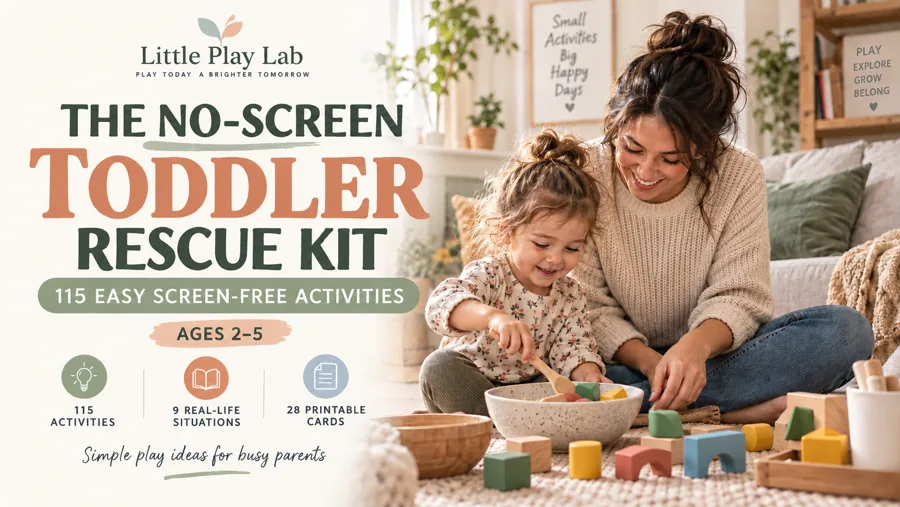
Need more options for this exact moment?
The Rescue Kit gives you a larger activity rotation so you can choose an idea that fits the time, energy and situation you actually have.
How to choose the right activity for the moment
- You have 5 minutes: Try sorting, drawing, matching, or a simple building challenge.
- You are cooking: Choose a safe nearby activity that does not require water, tiny pieces, or constant hands-on help.
- Your toddler has lots of energy: Try a pillow path, movement game, or treasure hunt.
- You need a calmer moment: Try drawing, matching, books, or simple paper play.
- You're stuck indoors: Rotate building, pretend play, creative play, and movement rather than expecting one activity to last all afternoon.
Screen-free does not have to mean screen-shaming
There is no need to make parents feel guilty for using screens. Families have different routines and circumstances. The purpose of a screen-free activity list is simply to give you more options when you want them.
Think of these ideas as a small backup shelf for real life: something to reach for when your child is bored, you need a short break to finish a task, or you simply want to make room for hands-on play.
Safety reminders for toddler play
Always choose materials appropriate for your child's age and abilities. Young children can put objects in their mouths, so avoid small pieces and anything that could present a choking hazard. Supervise water play closely, keep breakable or hazardous household items away, and follow the manufacturer's age guidance for toys and craft materials.
If an activity uses an ordinary household item, check it before handing it to your child. When in doubt, simplify the activity and choose a larger, safer material.
Keep the ideas ready before you need them
The No-Screen Toddler Rescue Kit gives you 115 screen-free ideas for ages 2 to 5, built around everyday materials and real-life moments.
How we choose these activities
We prioritize everyday materials, simple setup and flexible play that caregivers can adapt to a child’s age and abilities. We avoid activities that depend on small loose parts and encourage active adult supervision whenever safety requires it.
How this hub works
Little Play Lab is organised by moment, not by craft supplies, because that is how parents actually search at 5 PM. This page holds the overview and the starter fifteen. Each hard moment then has its own deep guide: the witching hour, while you cook, restaurants and waiting rooms, working from home, sick days, screen endings that end in tears, and the morning tablet demand. If your moment is not in that list, it is in the full guides index. Start anywhere; the system is the same: something ready, matched to the moment, before the moment arrives.
Frequently Asked Questions
What are the best screen free activities for toddlers?
The ones matched to the moment: water play and kitchen jobs while you cook, busy bags and sticker work when waiting, big movement for the witching hour, quiet baskets for early mornings. Across all moments, the champions are water, cardboard boxes, stickers, blocks, books and pretend with real household objects. The starter fifteen on this page are chosen to cover the whole day between them.
How much screen time is OK for a 2 to 5 year old?
Guidance from bodies like the American Academy of Pediatrics emphasises limits, quality and co-viewing for this age, with a commonly cited steer of around an hour a day of high quality programming for 2 to 5 year olds, and less or none under 2. Treat numbers as a compass, not a courtroom: the pattern of the day, and what screens replace, matter most. This is general information, not medical advice for your child.
How do I reduce my toddler's screen time without battles?
Do not start by removing; start by replacing. Add ready activities at the exact moments screens currently fill, keep endings predictable, and shrink screen slots gradually rather than announcing a ban. The morning tablet guide and the screen time meltdowns guide on this site cover the two hardest flashpoints step by step.
What do I do when my toddler asks for screens all day?
Check the foundations first: boredom with too many toys out, tiredness, hunger, and long unstructured gaps are the usual drivers. A rhythm to the day, fewer toys out with rotation, and a short menu of ready alternatives they can choose from will reduce the asking far more reliably than debating each request.
Are screen free activities expensive or complicated?
They should not be. The entire starter list here runs on water, boxes, stickers, books, blocks and kitchen objects. Paid kits, including ours, sell readiness and organisation, the thinking done in advance, not magical materials. A family can run screen free play for months on household things alone.
What are screen free activities for when I am busy?
Self-running loops near you: posting boxes, sticker pages, water at the sink while you cook, a busy bag while you work nearby. The working from home guide and the cooking guide on this site are built entirely around being busy in the same room.
My toddler is not interested in activities, only screens. What now?
Start smaller and more physical: water, movement and real jobs beat tabletop crafts for a screen focused child. Begin at their easiest moment of day, keep sessions short, start activities with them then fade, and expect a flat first week while the habit resets. The TV off transition guide covers this exact pattern.
For a more specific situation, explore travel activities for 3-year-olds.
For a more specific situation, explore when a toddler wants the tablet first thing in the morning.
Sources and further reading
- UNICEF Parenting, “Screen-free activities for children”
- UNICEF Parenting, “21 learning activities for babies and toddlers”
- American Academy of Pediatrics / HealthyChildren.org, “10 No-Cost, Screen-Free Activities to Play with Your Preschooler”
- American Academy of Pediatrics / HealthyChildren.org, “Toddler Activity”