
15-Minute Toddler Activities: 15 Easy Screen-Free Ideas
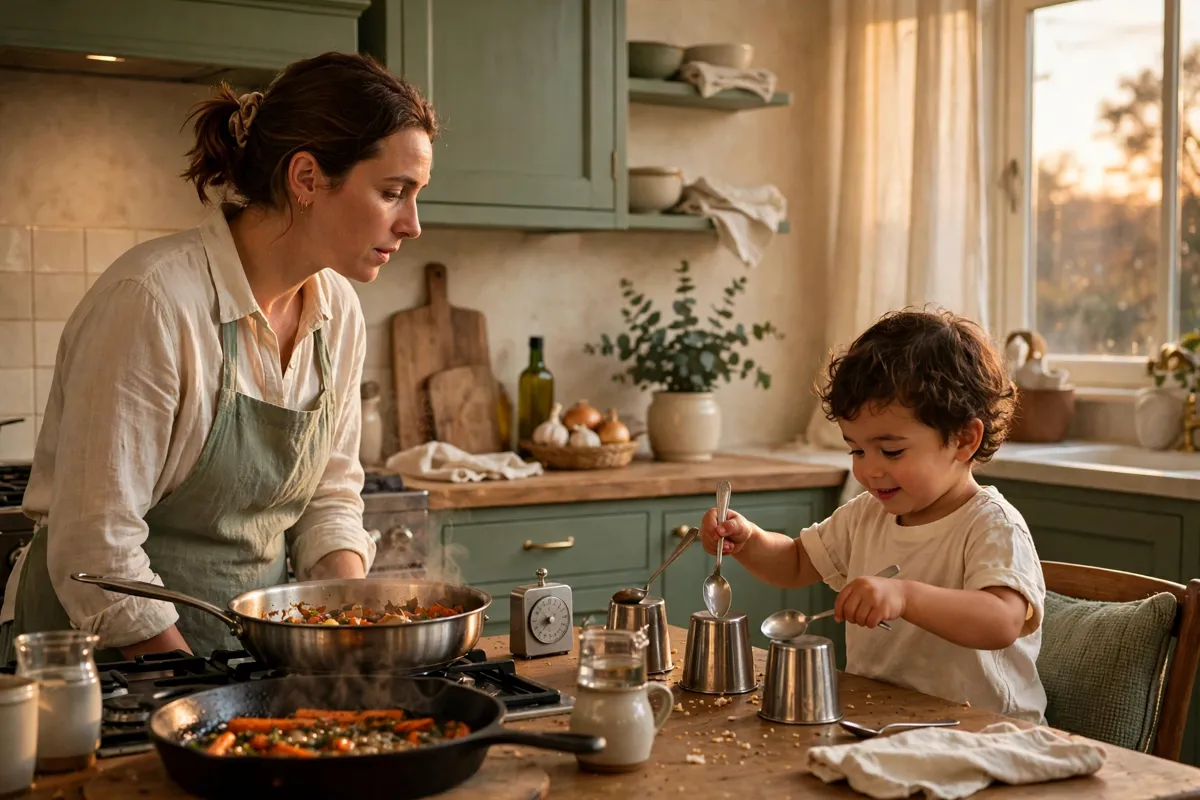
Need to make dinner, answer a few emails, finish a quick chore, or simply get through the next 15 minutes? You do not need a complicated craft or a room full of new toys. These 15-minute toddler activities are designed around simple play invitations that can be prepared quickly and adjusted for ages 2 to 5.
Only have 15 minutes? That is enough to start
The No-Screen Toddler Rescue Kit gives you 115 screen-free activities for ages 2 to 5, including short ideas you can pull out when you need a practical play window.
See the No-Screen Toddler Rescue Kit →Why 15 minutes can be enough
Toddler play does not have to be a long scheduled session. A short invitation to move, build, sort, pretend, draw, or help can turn an ordinary part of the day into play.
UNICEF recommends simple play opportunities that use familiar objects and everyday routines, while the American Academy of Pediatrics notes that inexpensive basics such as blocks, balls, buckets, and boxes can give children room for imaginative play. Read more at UNICEF Parenting and HealthyChildren.org.
The goal here is not to promise that every activity will keep every toddler busy for exactly 15 minutes. Some children may move on after five minutes. Others may repeat one activity much longer. The useful part is having a few low-prep options ready when you need them.
15 easy 15-minute toddler activities
Cup Tower Challenge
Give your toddler a small stack of sturdy plastic cups and invite them to build the tallest tower they can. Then try a wide tower, a tiny tower, or a tower for a stuffed animal.
Make it last: Ask, “Can you build one taller than this?” and let your child rebuild as many times as they want.
Stuffed Animal Delivery
Put two or three stuffed animals in a box or laundry basket. Tell your toddler they have deliveries to make. They can carry, push, or gently move each animal to a different room or pretend destination.
Try: “The teddy needs to go to the bedroom. Where should the bunny go?”
Tape-the-Line Walk
Use painter’s tape to make one simple line on the floor. Invite your toddler to walk along it, step over it, walk beside it, or follow it like a tiny road.
Variation: Make a gentle zigzag or several short lines. Keep the route away from stairs and other hazards.
Laundry Helper Sort
Turn a small pile of clean laundry into a sorting game. Ask your toddler to put socks together, separate shirts from towels, or place clothes into simple groups.
Why parents like it: It is play that fits into a real household routine instead of creating another job for you.
Find Something That...
Choose a simple category and send your toddler on a mini hunt around a safe area. Try “Find something soft,” “Find something red,” or “Find something you can wear.”
Keep it simple: One category at a time works well for younger toddlers.
Big Paper Scribble Station
Tape a large sheet of paper to a table or floor and offer a few age-appropriate crayons. Invite your child to make roads, circles, lines, pretend maps, or anything they like.
Make it different: Ask your toddler to draw a road for a toy car, a house for a stuffed animal, or a rainy-day picture.
Blanket Picnic
Spread a blanket on the floor and turn snack time or pretend snack time into a tiny picnic. Your toddler can arrange cups, plates, stuffed animals, and pretend food.
Extra idea: Let your child decide who gets served first.
Wash the Plastic Toys
Place a few large, washable plastic toys in a shallow container or child-safe play area with a small amount of water. Give your toddler a cloth or sponge and let them “wash” the toys.
Important: Stay within arm’s reach during water play and use only a small amount of water. Never leave a young child alone around water.
Box Road for Toy Cars
Put a few pieces of painter’s tape on the floor to create roads, parking spaces, and a finish line. Add larger toy vehicles and let your toddler drive them around.
Variation: Add a pretend gas station using an empty cardboard box.
Kitchen Band
Choose a few safe household objects such as wooden spoons and sturdy plastic containers. Let your toddler explore different sounds while you make a simple rhythm for them to copy.
Try: Tap-tap, pause. Tap-tap, pause. Then let your child create the next rhythm.
Pillow Stepping Path
Place a few firm cushions or pillows on the floor with enough space between them for safe stepping. Your toddler can move from one to the next without touching the surrounding floor.
Safety first: Use stable items, keep the path low, and supervise closely. Stop if the setup becomes slippery or unsafe.
Big Spoon Transfer
Give your toddler two large, stable containers and a large, easy-to-grip object such as a soft cloth. Let them move the cloth from one container to the other with a large spoon or their hands.
Make it a challenge: Try “Can you move it without dropping it?”
Paper Shape Hunt
Cut a few large paper circles, squares, and triangles before play. Place them around one safe room and invite your toddler to find them.
Then: Put matching shapes together or make a simple picture from the pieces.
Cardboard Box House
Turn a medium cardboard box into a pretend house, shop, garage, or animal home. You do not need to decorate it. The box itself can become whatever your toddler imagines.
Parent prompt: “Who lives here?” Then follow your child's idea.
Book + Toy Match
Choose a familiar picture book and place a few related toys nearby. Read a page, then invite your toddler to find a toy that matches something in the picture.
Example: If the page shows a dog, your child can find a toy dog or make a dog sound.
A practical note
Design the activity around the first two minutes, not the ideal fifteen. Put out only what your toddler needs for the first step, give one clear invitation, and let the child decide what happens next. If five minutes is all it lasts, that still counts as a useful play window. For repeat use, keep a few categories ready, build, move, sort, pretend and draw, and change one detail rather than starting from zero each time.
Need more options for this exact moment?
The Rescue Kit gives you a larger activity rotation so you can choose an idea that fits the time, energy and situation you actually have.
Explore the 115-Activity Kit →Which activity should you choose?
- Your toddler has lots of energy: try the tape-the-line walk or pillow stepping path.
- You need something quieter: try big-paper drawing, book + toy match, or paper shape hunt.
- Your child wants to “help”: try laundry sorting.
- Your toddler is asking for pretend play: try stuffed animal delivery, blanket picnic, or cardboard box house.
- You have almost no preparation time: try a cup tower, find-something hunt, or kitchen band.
- You need a warm-weather option: try supervised toy washing.
How to make a 15-minute activity actually work
1. Start with less
Putting every toy on the floor can make the choice harder. Start with one simple activity and only add materials if your child needs a new challenge.
2. Give a clear first step
Instead of saying “Go play,” try “Can you build a tower with these cups?” A specific invitation gives your toddler somewhere to begin.
3. Let your toddler change the rules
If the cup tower becomes a pretend restaurant, that is fine. If the cardboard box becomes a bus instead of a house, follow the new idea. The activity is a starting point, not a test.
4. Repeat favorites
You do not need a brand-new activity every day. Toddlers often enjoy repeating familiar play in slightly different ways. UNICEF also highlights simple everyday play and household participation as useful opportunities for young children. Read more at UNICEF Parenting.
What if 15 minutes becomes only 5?
That is okay. “15-minute activity” describes the kind of short play window these ideas are designed for, not a promise that a toddler will stay with one activity for exactly 15 minutes.
If your child loses interest, you can change one variable: add a new destination, introduce a stuffed animal, change the challenge, or simply put the activity away and try another one later.
Screen-free does not mean screen-shaming
There is no need to make parents feel guilty for using screens. Families have different routines, schedules, needs, and circumstances. The purpose of having screen-free activities available is simply to give your toddler another option when you want one.
The American Academy of Pediatrics discusses active play and screen use as part of a broader healthy routine for young children. Read more at HealthyChildren.org.
Keep the ideas ready before you need them
The No-Screen Toddler Rescue Kit gives you 115 screen-free ideas for ages 2 to 5, built around everyday materials and real-life moments.
Get the No-Screen Toddler Rescue Kit →How we choose these activities
We prioritize everyday materials, simple setup and flexible play that caregivers can adapt to a child’s age and abilities. We avoid activities that depend on small loose parts and encourage active adult supervision whenever safety requires it.
Built for gaps, not for mornings
Every activity here is judged by the clock twice: it must start in a minute and, just as important, it must be able to end cleanly when the timer of real life goes off, the pasta boiling, the call starting, the sibling arriving home. That is a different discipline from general easy play, which is the easy at home guide, and from the cooking guide, which owns the longest of these windows, the dinner hour. This page is for the fifteen minute gaps that pepper every day and somehow always catch parents empty handed.
Frequently Asked Questions
What can my toddler do in 15 minutes?
One complete small thing: a sticker page, a short puzzle, a sink play session, a mini circuit of the living room, a book basket dive, a posting box round, a dance freeze game. Fifteen minutes suits a single loop activity done properly far better than a big project started and abandoned.
What are quick activities while dinner is cooking?
Kitchen based, so they stay near you: their own drawer of containers and lids, washing vegetables in a bowl, stirring something safe and cool, sticker work at the table. The full kitchen system, grouped by where your toddler can be, is in the toddler activities while cooking guide.
How do I fill 15 minutes before we have to leave?
Choose things with a natural end and no cleanup tail: a book, a song game, packing their own bag with you, spotting things out of the window, one round of a posting box. Avoid paint, water and anything beloved that will need negotiating away at the door.
What 15 minute activities work while I am on a call?
The quiet, self-running kind: water reveal books, sticker scenes, a snack that takes time, a puzzle at their level. Working parents often keep a small meeting kit for exactly these windows; the working from home guide on this site explains the system in full.
Are short activities actually good for toddlers?
Yes. Short, complete play episodes match toddler attention spans, especially at two and three, and ending while something is still enjoyable teaches that play starts easily next time too. A day of good fifteen minute plays is a well played day by any honest measure.
What are 15 minute activities with no setup?
Animal walks across the room, dance freeze, I Spy at the window, sock ball bowling with toilet rolls, reading one picture book properly, and follow the leader. The setup for all of them is a sentence. Keep two or three in your pocket for queues, waiting rooms and boiling pasta.
How do I stop a 15 minute activity without a fight?
Announce the shape at the start: one more page, then shoes. Choose activities with visible endings (a finished puzzle, a completed sticker page) over open ended ones near transitions, and land the ending on something attractive next, a snack, the outing, a person arriving. Short does not have to mean abruptly cut.
For a more specific situation, explore travel activities for 3-year-olds.
For a more specific situation, explore working from home with a toddler: screen-free ideas.
For a more specific situation, explore toddler activities for restaurants and waiting rooms.
For a more specific situation, explore toddler witching hour activities for 4 to 6 pm.
Sources and further reading
- UNICEF Parenting, “Screen-free activities for children”
- UNICEF Parenting, “21 learning activities for babies and toddlers”
- American Academy of Pediatrics / HealthyChildren.org, “10 No-Cost, Screen-Free Activities to Play with Your Preschooler”
- American Academy of Pediatrics / HealthyChildren.org, “Toddler Activity”