
15 Low-Energy Toddler Activities: Calm Screen-Free Ideas
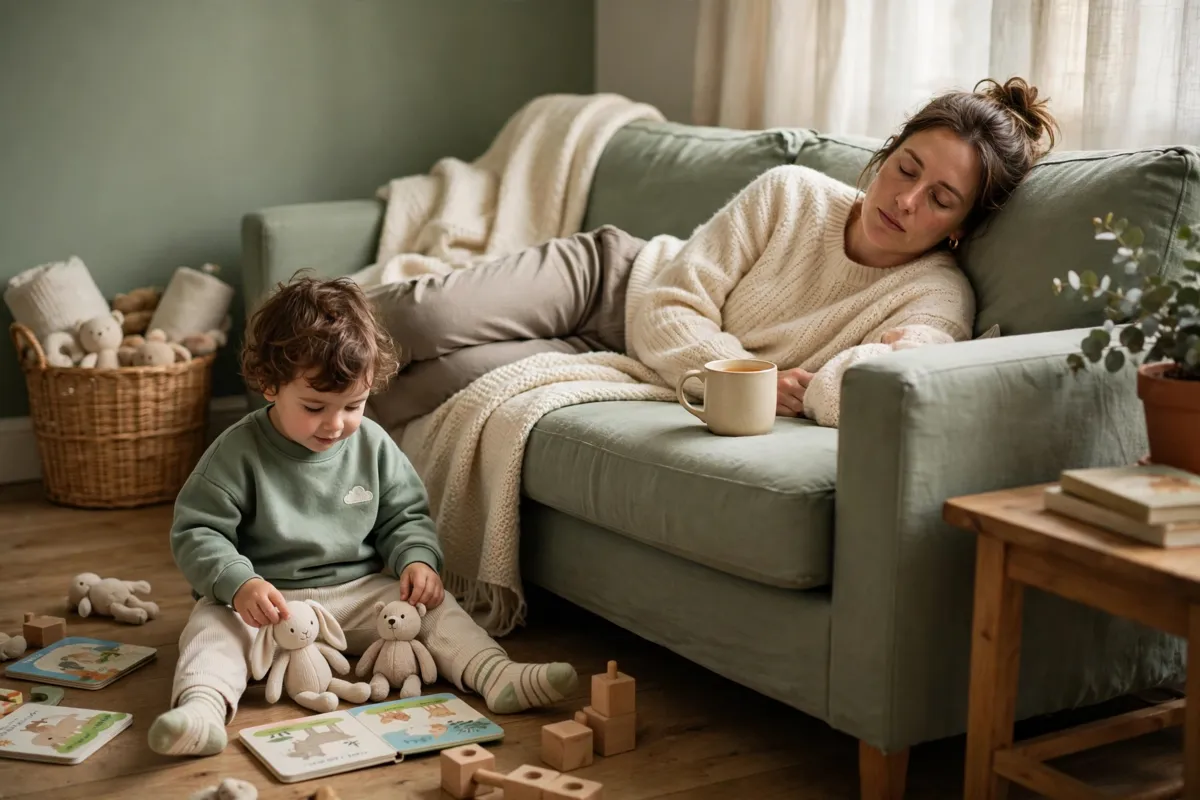
Some toddler moments call for less running, less noise, and less setup. Maybe you are winding down after a busy morning, waiting for dinner, sitting beside a tired child, or simply looking for a calmer alternative to another screen. These low-energy toddler activities give ages 2 to 5 simple things to look at, sort, draw, build, match, imagine, and explore at a slower pace.
Lower-effort play for lower-energy moments
The No-Screen Toddler Rescue Kit includes 115 activities for ages 2 to 5, giving you more options when you want hands-on play without a big setup.
See the No-Screen Toddler Rescue Kit →What makes a low-energy toddler activity work?
Low-energy play usually works best when the activity has a simple starting point, familiar materials, and room for your child to repeat or change the idea. UNICEF describes free play as giving children freedom to choose their materials and interests, while also emphasizing that children need a safe environment for exploring. UNICEF Parenting offers more guidance on free play.
You also do not need expensive toys or a complicated craft setup. The American Academy of Pediatrics highlights simple materials such as blocks, balls, boxes, and other everyday objects as useful for imaginative play. HealthyChildren.org has additional examples of no-cost screen-free play.
Most importantly, do not turn “calm play” into a performance test. An activity that lasts five minutes can still be useful. If your toddler wants to change the activity, move around, or ask you to join, follow what makes sense for the moment.
15 low-energy toddler activities
Cozy Book Basket
Put two or three favorite board books in a small basket or pile. Let your toddler choose one and look through the pictures, retell a familiar story, or ask you to read it.
Make it calmer: Add a blanket or stuffed animal as a reading buddy, but keep the setup simple.
Big Paper Scribble Time
Place a large sheet of paper on a table or safe floor space and offer a few washable crayons. Let your toddler make lines, circles, dots, or any picture they want.
Try: Ask “Can you draw a rainy cloud?” or “Where is the little house?” without correcting the drawing.
Matching Sock Pairs
Put a small group of clean socks in front of your toddler and invite them to find the matching pairs.
For younger toddlers: Start with only two or three pairs so the task stays manageable.
Slow Cup Stacking
Give your toddler a few sturdy plastic cups and let them stack, nest, line up, and rebuild them. There is no need to make a tall tower.
Variation: Ask them to make a “tiny tower,” then a “big tower.”
Quiet “I Spy”
Choose one visible object and give a simple clue such as “I see something blue.” Your toddler can look around and guess what you mean.
Keep it easy: Pick objects that are already in the room instead of hiding things.
Teddy's Cozy House
Give a stuffed animal a blanket and a small safe space to “live.” Your toddler can make Teddy a bed, give them a pretend book, or decide what Teddy should do before bedtime.
Parent prompt: “What does Teddy need?” Then let your child take the story wherever they want.
Color Sorting With Household Items
Choose a few larger, age-appropriate household objects and sort them into two or three color groups. Cups, socks, cloths, or large toys can work.
Keep it contained: Use a tray or small area so the activity does not turn into a whole-room cleanup.
Window Watching
Sit together by a window and look for things happening outside. Watch clouds, trees moving, cars, birds, rain, or people walking.
Make it a conversation: “What do you see?” is enough. You do not need a lesson or worksheet.
Stuffed Animal Doctor
Let your toddler pretend to care for a stuffed animal using safe pretend materials. Teddy might need a blanket, a drink of water, a check-up, or a quiet rest.
Simple is better: A toy cup and a blanket can be enough to start the story.
Simple Puzzle Time
Offer an age-appropriate chunky or simple puzzle your toddler already knows. Familiar puzzles can be a good option when you want something quieter and predictable.
Stay nearby: If the puzzle becomes frustrating, help with one piece or switch activities.
Tell a Story From Three Objects
Place three familiar objects in front of your toddler, such as a toy animal, a cup, and a small box. Make up a very short story that uses all three, then let your child add what happens next.
Example: “The bear found a box. What was inside?”
Picture Book Treasure Hunt
Choose a picture book and ask your toddler to find something simple on each page: a dog, a red object, a hat, a ball, or something that is round.
Why it is easy: You are using a book you already own rather than setting up a new activity.
Napkin Folding Helper
Give your toddler a few clean napkins and show them how to fold or stack them. They can make a pile, unfold it, and start again.
Keep expectations low: It is about handling and arranging the napkins, not perfect folds.
Sticker Picture
Offer an age-appropriate sticker sheet and a piece of paper. Your toddler can place stickers wherever they like or turn them into a simple picture.
Safety: Choose materials suitable for your child's age and supervise closely with any small pieces.
Quiet Sound Hunt
Sit together for a minute and listen for sounds around the home. Ask your toddler to identify what they hear: a fan, water, a door, birds outside, footsteps, or a clock.
Turn it into a game: Take turns choosing one sound to listen for next.
A practical note
Low-energy play is mainly about reducing friction. Choose fewer materials, stay in one room, and favor activities that do not need constant adult instructions. A useful rotation is “look” (books and picture hunts), “make” (drawing, stickers and simple building) and “sort” (socks, cups and toys). Quiet does not have to mean perfectly still; the useful question is whether the setup feels manageable for the moment you are actually in.
Need more options for this exact moment?
The Rescue Kit gives you a larger activity rotation so you can choose an idea that fits the time, energy and situation you actually have.
Explore the 115-Activity Kit →Which low-energy activity should you choose?
- Your toddler is tired: start with books, window watching, or a familiar stuffed-animal game.
- You need quiet for a few minutes: try drawing, a simple puzzle, matching socks, or a picture-book hunt.
- Your child wants you nearby: try the three-object story, quiet “I Spy,” or Teddy's cozy house.
- You have almost no supplies: use books, socks, household objects, or the view from a window.
- Your toddler keeps getting up: that is okay. Try a slightly more active version or let them move between two calm activities.
How to create a calmer play moment
1. Offer fewer choices
Five activities can feel like a lot. Try offering two: “Do you want books or drawing?” A small choice can make it easier to get started without turning the room into an activity buffet.
2. Use familiar activities
When you want a slower moment, this is not necessarily the time to introduce a complicated new craft. Familiar books, puzzles, sorting, drawing, and pretend play can be easier to begin because your toddler already understands the basic idea.
3. Make the environment calmer, not just the activity
Clear a small play area, reduce unnecessary clutter, and put away materials that are not part of the activity. UNICEF recommends making sure children have a safe environment when engaging in free play. See UNICEF's free-play guidance.
4. Let your child repeat things
Toddlers often enjoy doing the same simple action again and again. Stacking and knocking down cups, matching the same socks, looking for the same picture in a book, or putting a stuffed animal to bed can all be repeated without needing a new idea every few minutes.
5. Keep “quiet” different from “still”
A toddler can be calm while moving a toy, turning pages, sorting objects, or changing positions. You do not need to insist that a child sit completely still for an activity to count as low-energy play.
What if my toddler will not settle?
Some days your child simply needs movement or connection. If a quiet activity is not working, do not force it. Try a short movement break, a cuddle and book, or a different type of play.
Low-energy play is an option for certain moments, not a requirement for every part of the day. UNICEF notes that children can have different interests and ways of expressing themselves, and parents can support free play by following those interests within a safe environment. Read more from UNICEF.
Screen-free does not have to mean screen-shaming
Families use screens for many different reasons. This page is simply a collection of alternatives for the moments when you want a screen-free option.
The American Academy of Pediatrics describes many simple, low-tech ways to play, including reading, coloring, puzzles, and hands-on building. UNICEF likewise provides screen-free ideas for toddlers and preschool-age children. Neither resource requires parents to create elaborate activities or buy special equipment. HealthyChildren.org and UNICEF Parenting are useful starting points.
Keep the ideas ready before you need them
The No-Screen Toddler Rescue Kit gives you 115 screen-free ideas for ages 2 to 5, built around everyday materials and real-life moments.
Get the No-Screen Toddler Rescue Kit →How we choose these activities
We prioritize everyday materials, simple setup and flexible play that caregivers can adapt to a child’s age and abilities. We avoid activities that depend on small loose parts and encourage active adult supervision whenever safety requires it.
When the low energy is yours
This page is about you, not your child. Other guides in this family cover a calm or tired toddler; this one assumes the toddler is fine and the adult is ill, pregnant, injured, or running on the kind of empty that sleep maths cannot fix. If instead your child is the unwell one, the sick day activities page matches ideas to their energy, hour by hour. If the house simply needs its volume down for a sleeping baby or thin walls, the quiet activities guide is the right shelf. Here, everything is designed to be run from a sofa, a bed, or a chair you do not intend to leave.
Frequently Asked Questions
What can my toddler do when I am too tired to play?
Run a couch command centre: one room, everything they need inside it, activities that happen on the floor in front of you. Posting and sorting games, a book pile they bring you page by page, sticker work, a tea party where you are the honoured guest who never stands, and floor puzzles. Your job becomes words only: admiring, narrating, dealing challenges from the sofa.
How do I entertain my toddler when I am ill?
Prepare the room like a kind nurse would: gate or door set so the space is safe, snacks and water within their reach and yours, a nest beside the sofa, and the day's activities in one basket. Tell them plainly that you are poorly and resting, and that the plan is cosy day mode. Children are often gentler than expected when the situation is honestly named and the setup does the entertaining.
What are good activities to do with a toddler while pregnant?
Floor level play you supervise from a chair or the sofa, water play at a low table while you sit beside it, book reading in bulk, and games where you are the customer, patient or audience rather than the horse. Avoid being the climbing frame on the days your body says no; a toddler adjusts quickly when the alternative menu is consistent.
How do I keep my toddler safe while I rest on the sofa?
One room, made safe properly: hazards removed rather than guarded, door or gate closed, everything in sight from your spot, nothing climbable near anything breakable. Rest with one ear open rather than sleeping deeply, and save true unconsciousness for when another adult is home. A monitor helps if they are in the next room, but line of sight is the standard at this age.
Is it OK to let my toddler watch TV when I am unwell?
Yes. A planned show on a genuinely ill day is a tool, and the guilt helps nobody recover. Choose something calm and familiar with a real ending, keep your usual ending routine where you can, and let the rest of the day be the cosy floor play from this page. One day's pattern, kindly handled, does not undo anyone's habits.
What games can I play with my toddler lying down?
More than you would think: I Spy from the sofa, sound guessing (you make an animal, they guess, then swap), story building a sentence at a time, teddy patients brought to Doctor Sofa, drive the car to the cushion garage, and bring me something that is soft, red, or begins with a given sound. Verbal games are a whole category adults forget exists.
How do I get through a whole low energy day with my toddler?
Give the day a soft rhythm so you are not inventing it hourly: morning basket, snack, floor play block, lunch, rest window (nap or quiet time if they have one), bath as the afternoon activity because warm water occupies like nothing else, early simple dinner. Pre-position everything during your best hour of the day, and lower every standard that is not safety.
For a more specific situation, explore quiet time activities for 2-year-olds.
For a more specific situation, explore toddler activities for restaurants and waiting rooms.
For a more specific situation, explore toddler witching hour activities for 4 to 6 pm.
For a more specific situation, explore how to entertain a toddler while caring for a baby.
For a more specific situation, explore sick-day activities for toddlers at home.
Sources and further reading
- UNICEF Parenting, “Screen-free activities for children”
- UNICEF Parenting, “21 learning activities for babies and toddlers”
- American Academy of Pediatrics / HealthyChildren.org, “10 No-Cost, Screen-Free Activities to Play with Your Preschooler”
- American Academy of Pediatrics / HealthyChildren.org, “Toddler Activity”