
Quiet Time Activities for 2-Year-Olds
Somewhere around the second birthday, the nap starts to wobble. Some days your toddler sleeps for two hours, some days they sing to the wall for twenty minutes and then shout for you, fully recharged and ready to party at what used to be the quietest hour of your day. Quiet time is the bridge that replaces the nap before it fully goes: a daily rest period, at the same time, in a cosy safe spot, with a small set of calm activities. This page shows you how to build it with a two year old, what actually belongs in it, and how to handle the escapes, because there will be escapes.
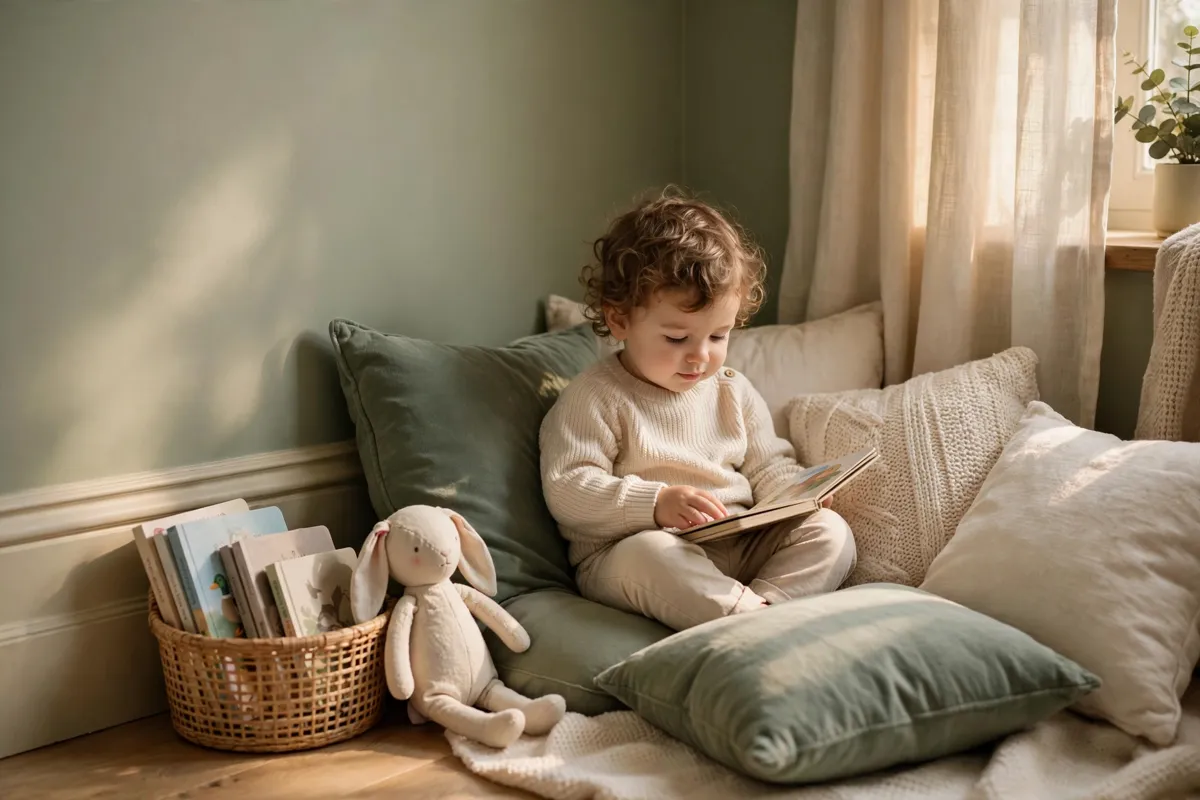
Quick answer: Start quiet time at the old nap time, in your toddler's room or a cosy corner, with three things: a pile of books, one beloved soft toy, and a small quiet time box that only appears for this. Begin with just 10 to 15 minutes and build up over two or three weeks toward 45 to 60. Keep the routine identical every day (toilet, drink, choose books, lights low, calm music or a timer), and treat resting, not sleeping, as success.

A quiet time box needs fresh contents every week
The No-Screen Toddler Rescue Kit gives you 115 print-and-go activities in 89 pages plus 28 printable activity cards, so rotating quiet time material takes minutes. Calm, seated, low voice ideas are flagged by situation. Made for ages 2 to 5.
Instant download. Print it once, use it every day.
Why quiet time is its own thing at two
This page is specifically about two year olds, and that age changes the recipe. A four year old can be told "rest time is until the timer rings" and mostly manage it. A two year old is working with a shorter memory, a bigger need to check you still exist, and a body that may genuinely still need the sleep some days. So quiet time at two is shorter, more supervised, more cushioned with routine, and honest about its real goal: not a silent hour, but a daily pocket of rest that protects the afternoon, the evening, and your one reliable break in the day.
It is worth protecting for the child's sake as much as yours. Toddlers who drop the nap entirely often fall apart by 5 PM, the tiredness simply arriving all at once in the evening instead. A rest period, even a wakeful one, spreads that load. Bodies and brains also process the morning during downtime; a two year old who has rested, even without sleeping, is measurably easier to live with by dinner.
Set up the quiet time spot
Quiet time works best where the nap lived: your toddler's room, in or beside their bed or cot, because the sleep association does half your work. No spare room or a shared bedroom? A corner of your room or the living room works if it is genuinely set apart: a small pop up tent, a cushion nest behind the sofa, a cosy corner with a blanket roof. What matters is that the spot is defined, boring in the best way, and only used for this.
Safety comes before everything at this age. If your toddler will be in a room with the door closed or a gate across it, that room must be fully childproofed for an unsupervised two year old: furniture anchored to walls, blind cords out of reach or cordless, no small objects, no climbable route to windows, socket covers where needed, and nothing heavy on high shelves. Use a monitor or keep the door ajar and check in quietly every so often. If the room cannot be made properly safe, do quiet time in a corner of the room you are in instead. The rest matters; the location is flexible.
How to start: small, same, and daily
The routine is the activity. Keep every day identical: lunch, toilet, drink of water, into the spot, choose three books together, lights low or curtains drawn, the same calm playlist or audio story started, the same words from you: "It is quiet time. I will come and get you when the music ends." Then leave, kindly and without ceremony.
Start embarrassingly small. Ten minutes of successful quiet time beats forty minutes of battle, because what you are building is the habit and the trust that you always come back. Add five minutes every few days as it holds. Most two year olds land somewhere between 30 and 60 minutes within a month. Some will still fall asleep inside quiet time on the days they need it, which is fine and even ideal during the transition. If late quiet time sleep starts pushing bedtime later, wake them by a set time or shift quiet time earlier.
10 quiet time activities a 2 year old can actually do alone
Everything here is solo safe at two: no small parts, no mess that matters, nothing that needs an adult's hands, and quiet by design.
1. The three book pile
Chosen together before you leave, every day. Board books and lift the flap books survive solo reading best. Familiarity is not a flaw here; a two year old "reading" a memorised book is doing exactly the resting work you want.
2. Tuck in the teddies
Two or three soft toys, a small blanket each. Putting babies to bed, patting backs, shushing them the way you shush her. This one mirrors the routine being done to them, and toddlers find it deeply settling.
3. The quiet time box
One small box that exists only for this hour, contents rotated weekly: a chunky puzzle, a set of nesting cups, a few big threading beads, a favourite vehicle. Because it appears once a day, its contents stay interesting for months.
4. Sticker book pages
Big stickers, backing paper peeled off by you beforehand so small fingers can manage. One page per quiet time keeps it special and stops the whole book being spent in a day.
5. Audio stories
A story or calm songs playing in the room gives the silence a shape and gives your toddler company that asks nothing of them. Save specific stories for quiet time only and they become part of the ritual.
6. Chunky crayons and a small pad
Scribbling is a complete activity at two. A small pad that lives in the quiet time box, a few washable chunky crayons, and a surface that forgives, like the inside of a big cardboard box laid flat if walls are a temptation.
7. Look and find picture books
Simple search books with big clear pictures: find the dog, find the red ball. A two year old can hunt happily through the same spreads daily, and the concentration is genuine rest for a busy brain.
8. Pillow nest engineering
Every cushion they own, one blanket, permission to build the nest however they like. Rearranging a nest is absorbing, physical in a slow way, and frequently ends with the builder asleep inside the construction.
9. Posting and sorting box
A lidded box with a slot and large safe objects to post, or two bowls and big soft items to sort by colour. Repetitive, quiet, and perfectly pitched at two year old hands.
10. A photo book of their people
A small album of family photos, pets, their own baby pictures. Two year olds study faces the way adults read novels, and naming everyone is a whole quiet time in itself.
The escape phase is normal. The ideas should not run out.
While your toddler tests the edges of quiet time, you need a deep bench of calm material. The Rescue Kit's 115 activities and 28 printable cards include whole sections of low energy, seated play. 89 pages, ages 2 to 5, sorted by real parent moments.
Instant download. Print it once, use it every day.
When they keep coming out (they will)
Every two year old tests quiet time. The test usually peaks in week one and returns whenever anything changes. Handle escapes with maximum boredom and minimum conversation. Walk them back, tuck them in, one sentence: "It is quiet time. I will come when the music ends." No negotiation, no new toys produced at the door as a bribe, no anger either. Each escape handled boringly teaches that the door is not where the fun is.
If escapes are constant, troubleshoot before you conclude it is defiance. The most common causes at two: quiet time is set too long for their current stage (shorten it and rebuild), it starts too late and they are already overtired and wired, it starts too early and they are genuinely not ready to rest, or the spot is too exciting (a room full of all their toys is not a rest space, it is a playground with the lights off). Also check the pre-routine: a two year old who has just had a big lunch, a toilet trip and a cuddle settles; one scooped straight from noisy play into a dark room protests entirely fairly.
Quiet time is not a screen slot
It is tempting, in the hard second week, to put a tablet in the spot and call it quiet time. Resist, for a practical reason: screens do not rest a toddler. The body is still, but the brain is being fed at full speed, and children commonly come out of screen "rest" more wound up than they went in, with the added cost of a screen ending battle at the exact moment you wanted peace. The families who keep quiet time screen free report it keeps its calming shape for years. If screens have a place in your day, give them their own honest slot, not this one.
How this page differs from our quiet activities guide
Parents mix these two up, so to be clear: quiet time, this page, is a daily scheduled rest period for a two year old, built as a routine with a set place, a set time and a box of materials. Our quiet activities for toddlers guide is different: quiet play for any moment that needs a low volume, a sleeping baby in the next room, an early waking, a flat Sunday afternoon. Use quiet time to protect the middle of every day; use the quiet activities list whenever the house needs its volume turned down. When you are the one who is unwell or running on empty, low energy toddler activities are the couch based version of the same kindness.
How we choose these activities
Quiet time suggestions are screened for a two year old alone in a safe space: nothing with small parts, nothing that needs supervision to be safe, nothing loud, and nothing so exciting it defeats the rest. Routine advice reflects general early years guidance from sources such as the American Academy of Pediatrics' HealthyChildren.org and ZERO TO THREE. If your child has additional needs or you are worried about their sleep or development, your own clinician's advice comes first, always.
Protect the quietest hour of your day
115 activities, 28 printable cards, and calm ideas sorted by moment, including naps that fail and afternoons that drag. The No-Screen Toddler Rescue Kit, $9.99, instant download, ages 2 to 5.
Instant download. Print it once, use it every day.
Frequently asked questions
How long should quiet time be for a 2 year old?
Start at 10 to 15 minutes and build by about five minutes every few days as it holds. Most two year olds settle between 30 and 60 minutes within a month. Shorter and successful beats longer and battled, because the habit and the trust that you return are what you are really building at this age.
My 2 year old will not stay in the room. What do I do?
Return them calmly and boringly, every time, with the same one sentence and no negotiation. If escapes are constant, shorten quiet time and rebuild, check it is not set too late in the day, and make sure the room is a rest space rather than a full toy room. A gate at the door keeps it safe while feeling less closed in for some toddlers.
Is quiet time OK if my toddler never sleeps during it?
Yes. Rest, not sleep, is the goal once naps start dropping. A wakeful hour with books and soft toys still lowers the day's load, protects the evening from the overtired crash, and gives your child practice at being peacefully alone. Many children sleep on the days they need it and rest on the others.
When do toddlers usually drop the nap?
Most drop it somewhere between two and a half and three and a half, with a messy transition of weeks or months where naps happen some days and not others. Quiet time is designed for exactly that transition: the slot stays, the sleep becomes optional, and the day keeps its rest either way.
What if my toddler falls asleep late in quiet time and bedtime goes wrong?
Cap the sleep, not the quiet time. If a late doze pushes bedtime out, end quiet time sleep by a set time, for example waking by 3 PM, or start the whole slot earlier in the day. Keep the wakeful rest as long as you like; it does not affect bedtime the way sleep does.
How do I do quiet time when my toddler shares a room or we have no spare space?
Make a defined corner instead: a cushion nest, a small pop up tent, or a blanket fort spot that only exists for quiet time, with the box and books kept there. If a sibling naps in the shared room, put the toddler's quiet time in your room or a living room corner. The defined spot matters more than the room.
My child cries when quiet time starts. Should I stop?
Brief protest at the start is common in the first week and usually fades fast once the routine proves you always return. Stay warm, keep the goodbye short, and check in quietly if crying continues rather than leaving them distressed. If crying is intense or persistent, shorten the sessions drastically and build up more slowly, or pause and restart in a few weeks.
Quiet time is one half of the independence story at two. The other half is play they start themselves while you are nearby, covered in our guide to independent activities for 2 year olds, and for all ages in independent play activities for toddlers.