Sensory Activities for Toddlers at Home: 20 Taste-Safe and Mess-Friendly Ideas
Updated October 26, 2026
Every parent has seen it: a toddler who ignores a room full of toys and plays for half an hour with a bowl of oats, a jug of water, or a lump of dough. That is sensory play, and it is not just mess. Touching, pouring, squashing, and splashing build language, hand control, focus, and the ability to calm down. The problem with most sensory lists online is that they mix everything together, including fillers that are unsafe for toddlers who still put things in their mouths. This page fixes that: 20 sensory activities for toddlers at home, sorted by safety stage, so you always know what is safe for your child right now.
Quick answer: Start with taste-safe fillers while your toddler still mouths objects: oats, cereal, cooked pasta, water, and ice. Move to dry rice, beans, kinetic sand, and small loose parts only once mouthing has stopped, usually around age 3, and always with supervision. One bin with a lid, reused with different toys inside, covers most of the week.
What sensory play actually is, and why it matters
Sensory play is any play that explores the senses: touch, sight, sound, smell, taste, and movement. A toddler scooping oats is learning weight and volume. A toddler squashing dough is building the hand muscles that will one day hold a pencil. A toddler pouring water back and forth is learning full and empty, cause and effect, and patience, all without a single lesson.
It also builds language. Sensory play gives children real things to describe: wet, dry, cold, rough, smooth, heavy, light, squishy, crunchy. When you narrate what your child does ("You poured it all out. Now the cup is empty."), those words arrive attached to a real experience, and they stick. And for many toddlers, slow sensory play is the fastest route back to calm after a big feeling, which is why the calm-down section below matters as much as the messy one.
The safety rule first: match the filler to your child
Before any activity, answer one question: does my child still put things in their mouth? If yes, everything in this table's left column is your world. If mouthing has stopped, the right column opens up, still with supervision.
| Stage | Safe fillers | Rules |
|---|---|---|
| Taste-safe (under 3, or any mouther) | Oats, cereal, cooked pasta, crushed crackers, water, ice, yoghurt paint, whipped cream | Safe if a little ends up in a mouth. Still supervise. Discard food fillers after play. Check allergies first. |
| Supervised (age 3 plus, mouthing stopped) | Dry rice, dry beans, kinetic sand, cloud dough, pompoms, small loose parts | Supervise closely. Keep small parts away from younger siblings. Water play always at arm's reach, and empty containers right after. |
Taste-safe sensory play for toddlers who still mouth objects
These six activities are the starting point for every toddler under 3, and for any older toddler who still explores with their mouth. They are also the cheapest sensory play there is, because the fillers come from your kitchen.
1. Oat sensory bin
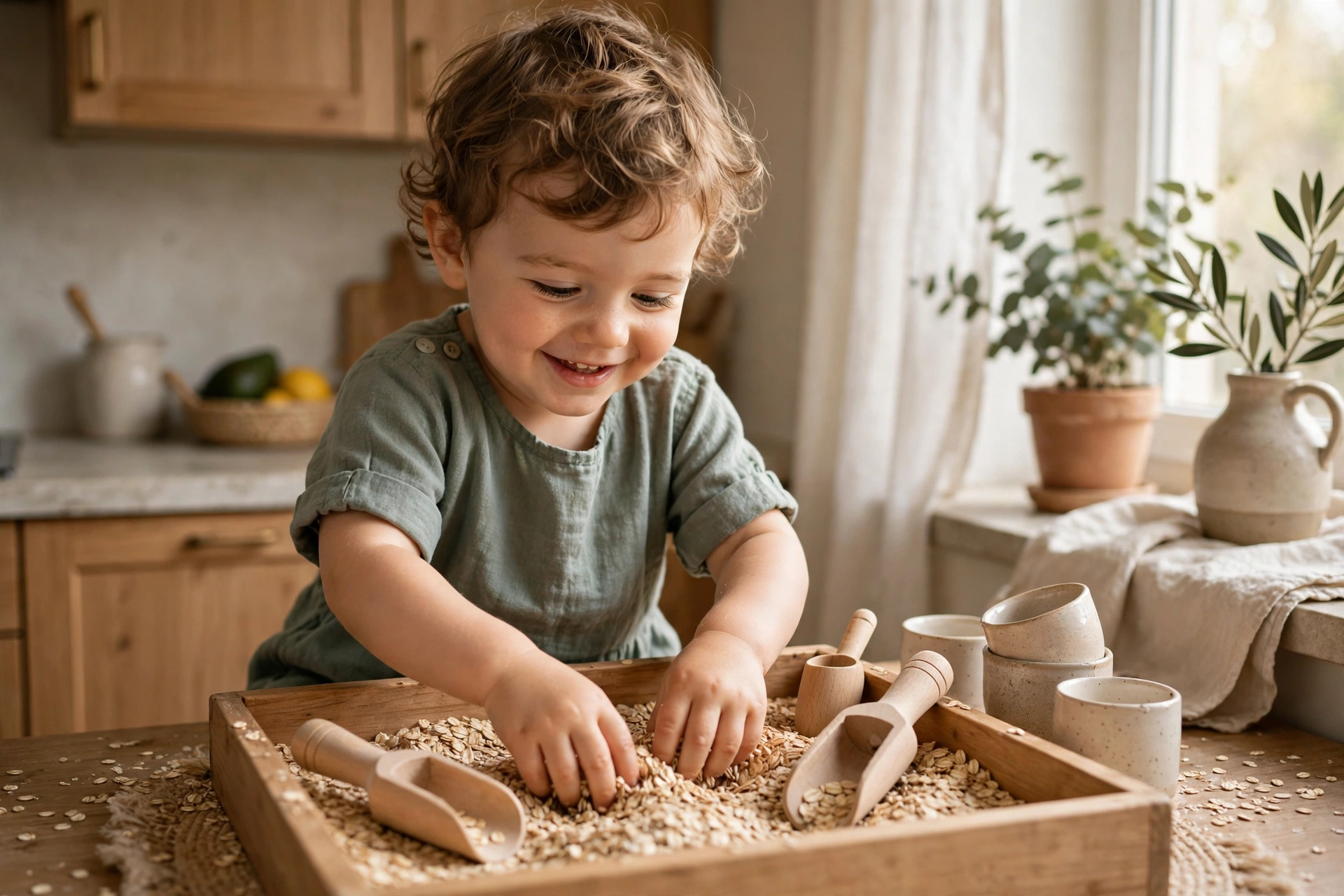
Tip a bag of rolled oats into a shallow storage box, add measuring cups, spoons, and a few large toys to bury and find. Oats are the perfect first filler: cheap, soft, and safe if a little ends up in a mouth. Swap the buried toys to change the theme: farm animals one week, cars the next. Our easy toddler activities at home guide has more no-prep setups like this one.
2. Cereal bin
Cheerios, rice puffs, or any large cereal, in a box with scoops and small containers to fill and dump. Cereal bins are louder and crunchier than oats, and the scooping and pouring practice is the same. Use large cereal pieces only, and keep the bin away from younger babies.
3. Cooked pasta play
Cook pasta, let it cool, and add a little oil so it does not stick. Toddlers love the slippery, squishy texture, and you can colour it with food dye for extra interest. This is the messiest taste-safe option, so set it on a tray or a shower curtain, and expect pasta on the floor.
4. Edible finger painting
Mix plain yoghurt with a few drops of food colouring, or use pureed carrot, beetroot, or custard as paint. Spread it on a wipe-clean tray or a high chair tray and let your toddler smear, stamp, and explore freely. Because the paint is food, the usual worry about paint in mouths disappears, and children who are cautious about mess often relax completely.
5. Whipped cream or pudding painting
Spray whipped cream on a tray, or spread pudding, and let your toddler draw roads, swirls, and handprints in it. It smells sweet, feels cold and soft, and wipes away in seconds. Add a few drops of food colouring for colour mixing without any worry.
6. Water play in a baking dish
A towel on the floor, a baking dish of warm water, cups, a sponge, and a funnel. Pouring and squeezing will keep a toddler going for ages, and water is the most forgiving sensory material there is. Stay at arm's reach, and empty the dish as soon as play ends.
Sensory play without the worry
The No-Screen Toddler Rescue Kit sorts 115 activities by the moment you need them, including messy play that is actually safe for mouthing toddlers. 89 pages, 28 printable activity cards, ages 2 to 5.
Instant download. Print it once, use it every day.
Supervised sensory play for age 3 plus
Once mouthing has stopped, the sensory world opens up. These activities use smaller parts and richer textures, and they hold attention even longer, because the tools get more interesting.
7. Dry rice bin
Uncooked rice in a lidded box, with small cups, funnels, and toy figures to hide and find. You can dye rice with food colouring and vinegar for colour themes: blue rice and sea animals for an ocean bin, brown rice and trucks for construction. Rice bins last for weeks if you keep them dry and lidded.
8. Oobleck
Mix two parts cornstarch to one part water. It feels solid when you squeeze it and melts back into liquid when you let go. Toddlers find this genuinely fascinating, and so do adults. It is the best cause-and-effect lesson in this whole page, and it costs almost nothing.
9. Cloud dough
Mix flour with a little vegetable oil until it holds together when squeezed and crumbles when released. Add cinnamon for scent, or cocoa powder for a chocolate version. Cloud dough keeps for months in an airtight container, and it is perfect for scooping, moulding, and pretend baking.
10. Ice excavation
Freeze small toys in a tub of water overnight, then give your toddler warm water in a squeeze bottle, a spoon, and a cup to rescue them. It teaches patience, hot and cold, and cause and effect in one slow, satisfying activity. Use large toys only, and dry wet floors promptly.
11. Kinetic sand play
Kinetic sand holds its shape when squeezed and flows when released, which makes it endlessly buildable: castles, roads, birthday cakes. Keep it in a tray with raised edges, because it travels. Supervise, and keep it away from younger siblings who still mouth objects.
12. Shaving foam tray
Spread unscented shaving foam in a tray and let your toddler draw shapes, letters, and roads for cars in it, or hide small toys to uncover. It is squishy, cool, and very satisfying. Use unscented foam, supervise closely, and wash hands right after, because shaving foam is not taste-safe.
Sound, smell, and sight sensory play
Touch gets all the attention, but the other senses matter just as much, and they are often the ones that calm a child or spark language.
13. Homemade shakers and sound matching
Fill sealed containers with rice, pasta, or bells, and make pairs of identical shakers. Your toddler shakes, listens, and finds the match by sound alone. It builds listening focus and auditory memory, and it doubles as a music session when the matching game is done.
14. Scented playdough
Add cinnamon or vanilla to homemade playdough (2 cups flour, half a cup of salt, 2 tablespoons of oil, about a cup of warm water, a few drops of food colouring). Scent adds a whole sense to a familiar activity, and children often play longer with scented dough than plain. Note that salty playdough is not for eating, so this one is for children past the mouthing stage.
15. Light and shadow play
In a dim room, give your toddler a flashlight and coloured cellophane sheets to layer over it, or make shadow puppets on the wall. Watching colours change and shadows grow and shrink is visual sensory play at its simplest, and it works beautifully as a calm evening activity.
16. Ice painting
Freeze water in trays, pop the cubes out, and let your toddler paint them with watercolours or food colouring as they melt. The colours swirl and change as the ice melts, which teaches temperature, states of matter, and art all at once. Messy, but the mess is just coloured water.
One bin, a whole week of play
The Rescue Kit shows you how to rotate one sensory setup across a week: change the toys, not the filler, and a single bin stays new for days. 115 activities, 28 printable cards, ages 2 to 5.
Instant download. Print it once, use it every day.
Calm-down sensory play
Sensory play is not only for wild energy. Slow, rhythmic, deep-pressure sensory input is one of the fastest ways to help a toddler settle, and these activities are worth knowing for the witching hour and the pre-bedtime stretch.
17. Glitter calm bottle
Fill a clear bottle with warm water, glitter, and a little clear glue, seal it tightly, and let your toddler shake it and watch the glitter settle. Watching something slow and predictable helps a busy brain slow down too. Seal the lid with tape for extra safety, and use it as part of the calm-down routine, not as a toy to throw.
18. Blanket burrito and cushion squish
Roll your toddler snugly in a blanket like a burrito, or squish them gently between cushions. Deep, even pressure is calming for many children, and they will usually ask for it again once they know the game. Keep it gentle and playful, and stop the moment they want out.
19. Warm water pouring
Warm water, a jug, and cups, poured slowly back and forth. The warmth, the sound, and the repetition are all calming, and this is the sensory activity most likely to turn a frazzled afternoon around. It is also the easiest: no setup beyond a towel and a jug.
No-mess sensory play
Some days you want the sensory benefit without the cleanup, and some children simply do not like messy hands. Both are fine. This activity keeps the sensory input and removes the mess.
20. Sealed bag painting and sensory bottles
Put a spoonful of poster paint in a strong ziplock bag, press the air out, seal it, and tape over the seal. Your toddler presses, swirls, and drags fingers through the paint from outside the bag: all the sensory feedback of painting with zero mess. Sensory bottles work the same way: water, glitter, beads, and small objects in a sealed bottle to shake, roll, and watch.
The cleanup system that makes sensory play sustainable
Sensory play only happens regularly when cleanup is easy. Three rules make it so: always play on a tray, a shower curtain, or a wipe-clean tablecloth. Always use a bin with a lid, so the filler survives the week. And always play with one bin at a time, not three. Parents who follow those three rules do sensory play three times as often, because the barrier is not the mess, it is the setup. When the day is mostly indoors, our indoor toddler activities guide covers big movement, and our quiet activities for toddlers guide has calm setups for the days when sensory play needs to slow down.
Messy play, minus the stress
The Rescue Kit gives you 115 activities with setup times and mess levels marked, so you can pick a 2 minute sensory win on a tired day and a big messy project on a slow one. 89 pages, 28 printable cards, ages 2 to 5.
Instant download. Print it once, use it every day.
Frequently asked questions
What age can sensory play start?
Sensory play can start as soon as a baby can sit and reach, with taste-safe materials and close supervision. For toddlers, the key is matching the material to the child: taste-safe fillers while they still mouth objects, and small loose parts only once mouthing has stopped, usually around age 3.
Is dry rice safe for toddlers?
Dry rice is safe for toddlers who have stopped mouthing objects, with supervision. For toddlers who still put things in their mouths, use taste-safe fillers instead: oats, cereal, cooked pasta, or water. The rule is simple: if it can end up in a mouth, it must be safe to eat.
What if my toddler eats the sensory bin filler?
If the filler is taste-safe, a small taste is harmless, though you should still discourage eating play materials and discard taste-safe mixes after play to avoid spoilage. If the filler is not taste-safe, remove it and switch to a taste-safe option. Check for allergies first with any food-based filler.
How long do toddlers play with sensory bins?
Most toddlers play 10 to 30 minutes with a fresh sensory setup, longer when the tools are interesting and the theme is new. Change the toys inside the bin rather than the filler to make an old bin feel new again.
What if my child hates getting their hands messy?
Never force messy hands. Start with no-mess sensory play: sealed bag painting, sensory bottles, and dry textures with tools like scoops and tongs. Many children who refuse wet mess happily play with dry oats or water with cups, and tolerance usually grows slowly with choice, not pressure.
Does sensory play help speech and language?
Yes. Sensory play is a language goldmine because it gives children real things to describe: wet, dry, cold, rough, smooth, full, empty, heavy, light. Narrate what your child does, ask simple questions, and let them lead. Words learned while hands are busy tend to stick.
How often should toddlers do sensory play?
A few times a week is plenty. One bin with a lid, reused across the week with different toys inside, gives regular sensory play without daily setup or daily mess. Follow your child's interest: some weeks they will ask for it daily, other weeks not at all, and both are normal.
Sources and further reading
American Academy of Pediatrics (HealthyChildren.org) guidance on play and early child development. Paediatric occupational therapy guidance on sensory play and regulation at home.
If your toddler is just starting sensory play, begin with our activities for 3 year olds at home for age-matched ideas, or our activities for 4 year olds at home for the preschool year. When the day is mostly indoors, our indoor toddler activities guide covers big movement alongside calm play.