
Activities for 2 Year Olds at Home: 20 Easy Ideas That Actually Teach Something
Updated November 6, 2026
Activities for 2 year olds at home work best when they are short, simple, and built around what a two-year-old already loves: pouring, copying you, making noise, and doing the same thing again. Most lists fail on the first idea. They hand a two-year-old a craft that needs scissors, a game with rules a preschooler barely follows, or a bead activity that is not safe at this age, then call it easy because an adult could set it up in five minutes. A two-year-old does not care about your setup time. They care whether they can touch it, move it, and do it again. This page gives you 20 ideas that pass that test, sorted into four groups of five: learning without lessons, big movement for small rooms, quiet hands and calm focus, and pretend play and real jobs. Every one uses things you already own, takes five to ten minutes, and comes with the age two version, because the difference between a two-year-old and a four-year-old is not small, it is the whole game.
Start here: five activities that work today
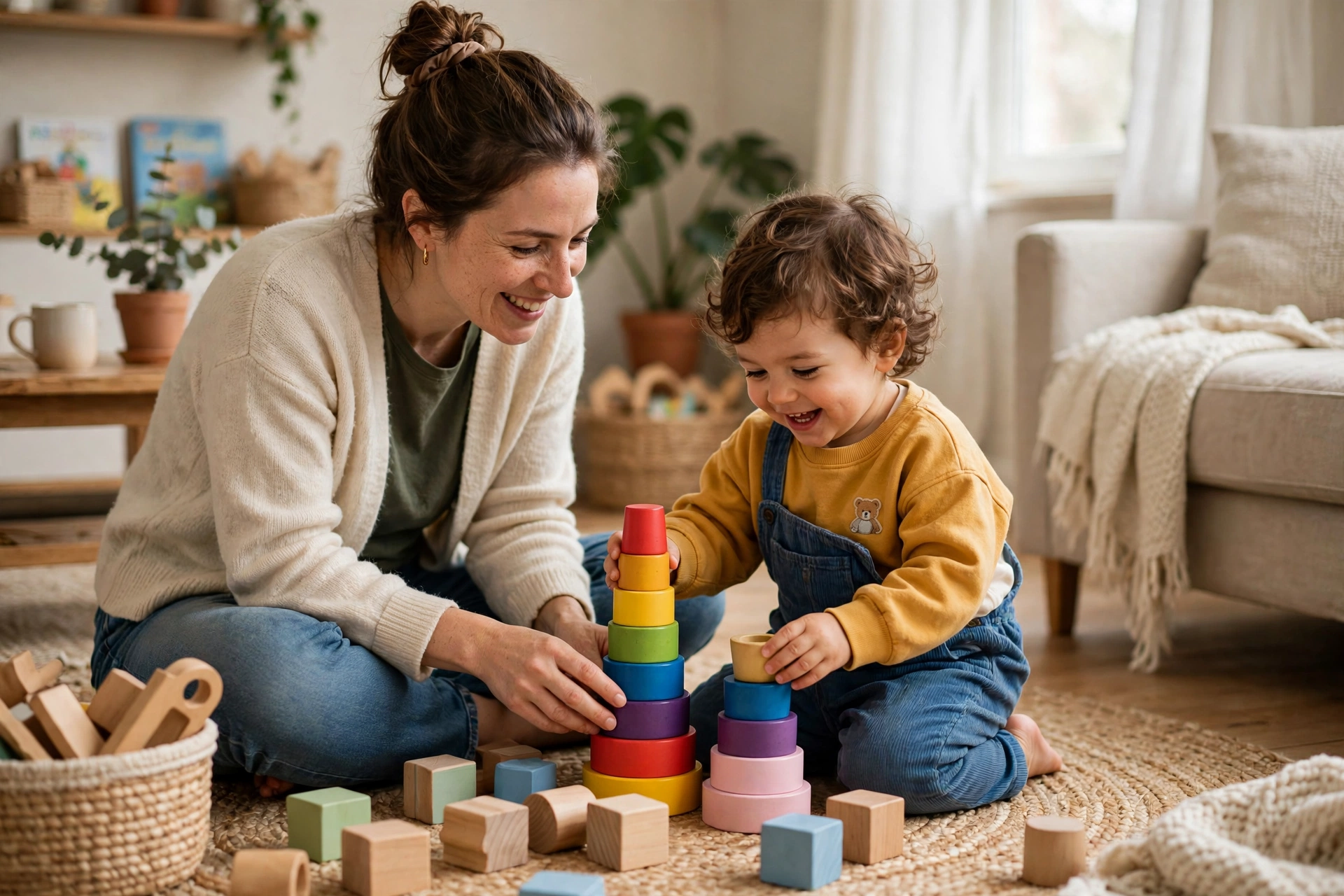
If you only have five minutes, start with these five. They are the most forgiving ideas on this page, which means they work on a tired day, in a small room, with no preparation and no cleanup worth mentioning. Do one, then stop. A toddler who knows five activities well plays more than a toddler who half knows twenty, and these five are the ones to know first.
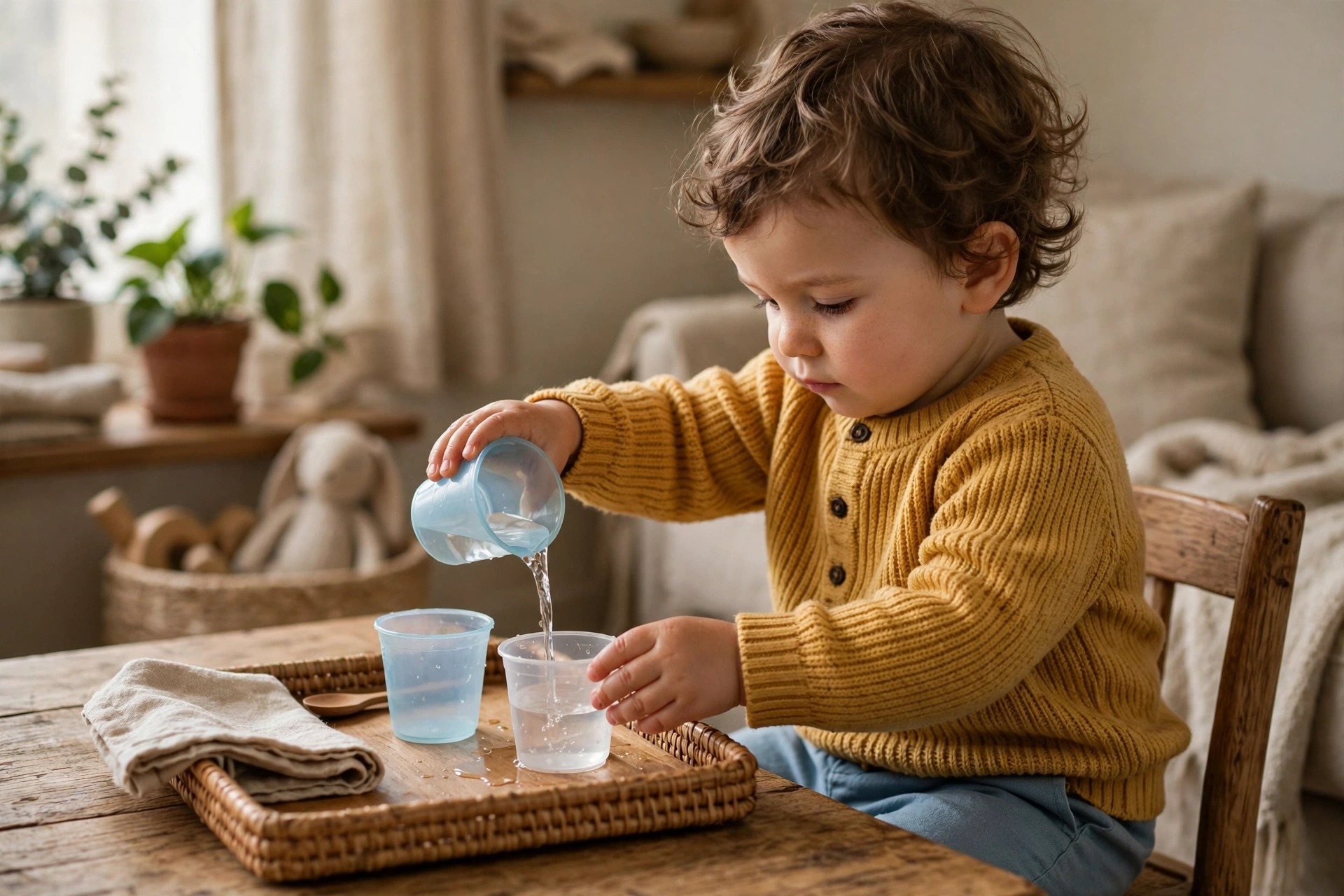
1. Water pouring. Two small cups, a jug, and a tray. Your toddler pours water back and forth, spills some, and pours it again. It builds hand control and focus, and it is the calmest activity on this page.
2. Stack and knock down. Build a small tower of blocks or stacking cups together, then let your toddler knock it over and rebuild. Knocking it down is usually half the fun, and rebuilding is the learning.
3. Color hunt. Say one color, then race around the room finding everything in that color. Red socks, a red cup, a red book. It teaches colors with no flashcards and no sitting still.
4. Dance freeze. Put on a song, dance together, and freeze when the music stops. It burns energy, builds listening, and needs nothing but a phone and a song you already know.
5. Pretend tea party. Cups, a teapot, and a toy audience. Pour, serve, sip, repeat. It is the easiest pretend game at two, because pouring and serving are the whole game, and there is no story to remember.
What a 2-year-old can actually do
Most activities for 2 year olds at home fail for the same reason: they were written for a four-year-old and the number two was swapped in. A two-year-old is a different player, and the whole page is built on five facts about them. First, their attention comes in short bursts, five to ten minutes, and then they leave, which is normal and not a sign the activity was wrong. Second, they still mouth things, so nothing small, nothing sharp, and nothing that fits through a toilet paper tube belongs in their hands. Third, they copy adults, so the best activities look like your real life: cooking, cleaning, pouring, carrying. Fourth, they say no to almost everything, including things they like, because no is how they practice control. Fifth, they play next to other children rather than with them, and next to you rather than alone, which is parallel play, and it counts as real play.
From those five facts come the rules of this page. Keep every activity to five or ten minutes, and stop while it is still fun. Offer two choices instead of an open question, because dance or fort works and what do you want to do does not. Follow their lead: if they want to put the blocks in the bucket instead of building a tower, that is the game now. Narrate what they do, because you are pouring, splash, builds language faster than any flashcard. And stay close. Small objects, water, and anything they might taste stay within reach of you, not just within reach of them. The two-year-old day also has one rhythm worth knowing: a wild burst, then a calm one, then a wild burst again. If you plan the day that way, movement then quiet then movement then quiet, the day runs itself, and the activities on this page are sorted to match it.
20 activities for 2 year olds at home
Twenty ideas, four groups of five, each one with the age two version spelled out, because an activity that works at two and at five is two different activities with the same name. The groups follow the rhythm of the day: learn, move, calm, pretend, then repeat. You do not need all twenty. Pick five, learn them well, and add one new idea a week.
Learning without lessons. These five are the educational activities for 2 year olds at home that teach the most, and none of them look like a lesson. No flashcards, no apps, no sitting still. The learning hides inside things a two-year-old already wants to do: hunt, count, post, name, and find.
1. Color hunt
Say one color, then race around the room finding everything in that color. Red socks, a red cup, a red book, and then swap colors and go again. Name the color every time you find something, because hearing red ten times in a game teaches more than hearing it once on a card. Age 2: one color at a time, and you find the first two together. Age 3 to 4: they hunt alone, and you add a second color to find at the same time. Age 5: they sort what they found by color, then by size. Best moment: the ten minutes after breakfast, when the day needs a start and nobody has left the house yet.
2. Count the stairs and the snacks
Count real things, not pictures of things. Count each stair as you climb, touching it as you go, because touching and saying is the real maths skill at two. At snack time, count raisins onto a plate together, then count them into mouths. Most twos cannot track more than three yet, so count to three and stop, and let the number grow over months. Age 2: count to three, with your hand on each stair. Age 3 to 4: count to five, and they count the snacks while you pour the drink. Age 5: count to ten, and ask them how many are left when one is eaten. Best moment: the stairs, every single day, because the staircase is the one counting tool you never have to set up.
3. Shape posting box
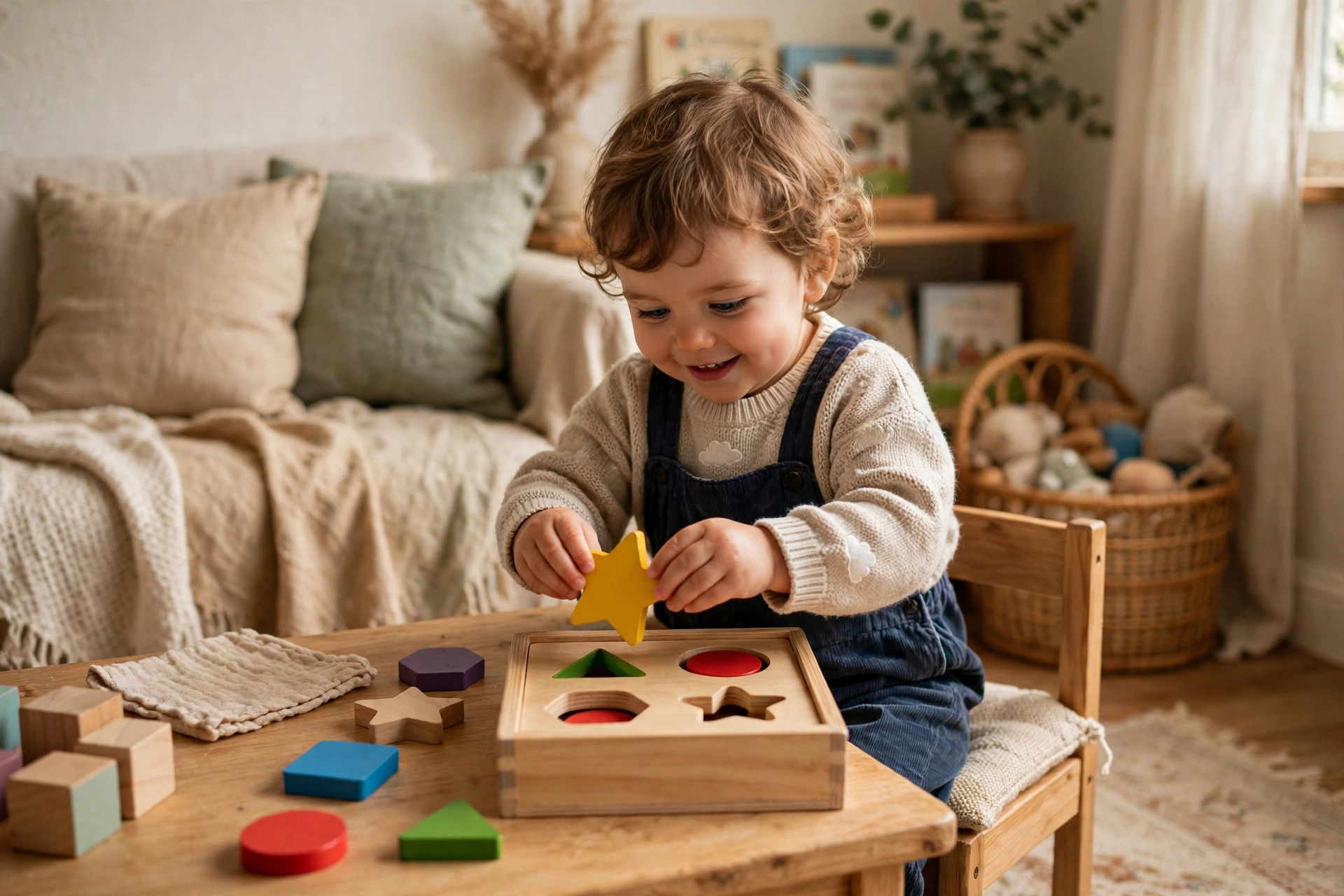
Cut slots in the lid of a shoebox and post big card shapes through them, a circle, a square, and a triangle. Name each shape as it goes in: triangle, in you go. The posting is the game, and the naming rides along for free. Use shapes big enough that nothing can be swallowed, and sit beside them for the whole game. Age 2: one shape at a time, and you hold the box steady. Age 3 to 4: all three shapes at once, and they name the shape before they post it. Age 5: they cut the shapes with you and sort them by shape, then by color. Best moment: the quiet hour before lunch, when the energy is low and the hands still want work.
4. Sock puppet naming game
Put a clean sock on your hand and let the puppet ask the questions: where is your nose, where is the dog, what does the cow say. Toddlers answer puppets far more readily than they answer grown-ups, and a puppet turns a naming game into a conversation. Pull five familiar objects from a laundry basket, one at a time, and let the puppet name each one with delight. When your toddler says ball, stretch it warmly: yes, red ball, big red ball. One word becomes two, and two become a sentence over months. Age 2: point and name, and the puppet does the asking. Age 3 to 4: they answer in two words, and the puppet asks where things live. Age 5: they wear the puppet and ask you the questions. Best moment: the waiting minutes before dinner, when nothing else holds them and the puppet always does.
5. Picture book treasure hunt
Open a favorite picture book and ask your toddler to find things in it: where is the dog, where is the moon, where is the red car. Pointing and naming builds understanding long before speech catches up, and a book your toddler already loves is the easiest treasure map there is. Let them turn the pages, point, and make the animal noises, because the noises are language too. Age 2: find one thing per page, and you point first. Age 3 to 4: find three things, and they tell you what happens next. Age 5: they tell the story back to you, page by page, with the wrong words in the right places. Best moment: the last ten minutes before bed, when the book is the calm and the hunt is the game inside it.
Five activities are a start, the kit is the whole day
The No-Screen Toddler Rescue Kit sorts 115 activities by the moment you need them, including learning games, busy play, and calm wind-downs, so the hours after these five are covered too. 89 pages, 28 printable activity cards, ages 2 to 5.
Instant download. Print it once, use it every day.
Big movement for small rooms. Two-year-olds have more energy than space, and these five spend it without leaving the living room. The rule for all five is the same: clear the floor, keep the furniture low, and stay within arm's reach, because a two-year-old who is moving fast falls fast, and the landing should be soft.
6. Dance freeze
Put on a song, dance together, and freeze when the music stops. The freezing is the game, because listening for the stop builds self-control, and a two-year-old who freezes on command is practicing the same skill they need at the road and the stairs. Keep the dancing big and silly, and make the freeze a funny pose. Age 2: dance and freeze with your help, and the freeze lasts two seconds. Age 3 to 4: they freeze alone, and you add animal poses to the freeze. Age 5: they control the music and shout freeze themselves. Best moment: the witching hour, when the energy is highest and the house is loudest.
7. Animal walks
Waddle like a penguin, hop like a bunny, stomp like an elephant, and crawl like a bear across the living room. Animal walks turn a small room into a big adventure, and each animal works a different part of the body: hopping builds balance, crawling builds shoulders, stomping builds legs. Call the animal, do the walk together, and let your toddler pick the next one. Age 2: one animal at a time, and you walk beside them. Age 3 to 4: they pick the animal and show you how it moves. Age 5: they invent the animals, and the zoo gets stranger by the day. Best moment: a rainy afternoon, when going outside is not an option and the energy has nowhere else to go.
8. Cushion course
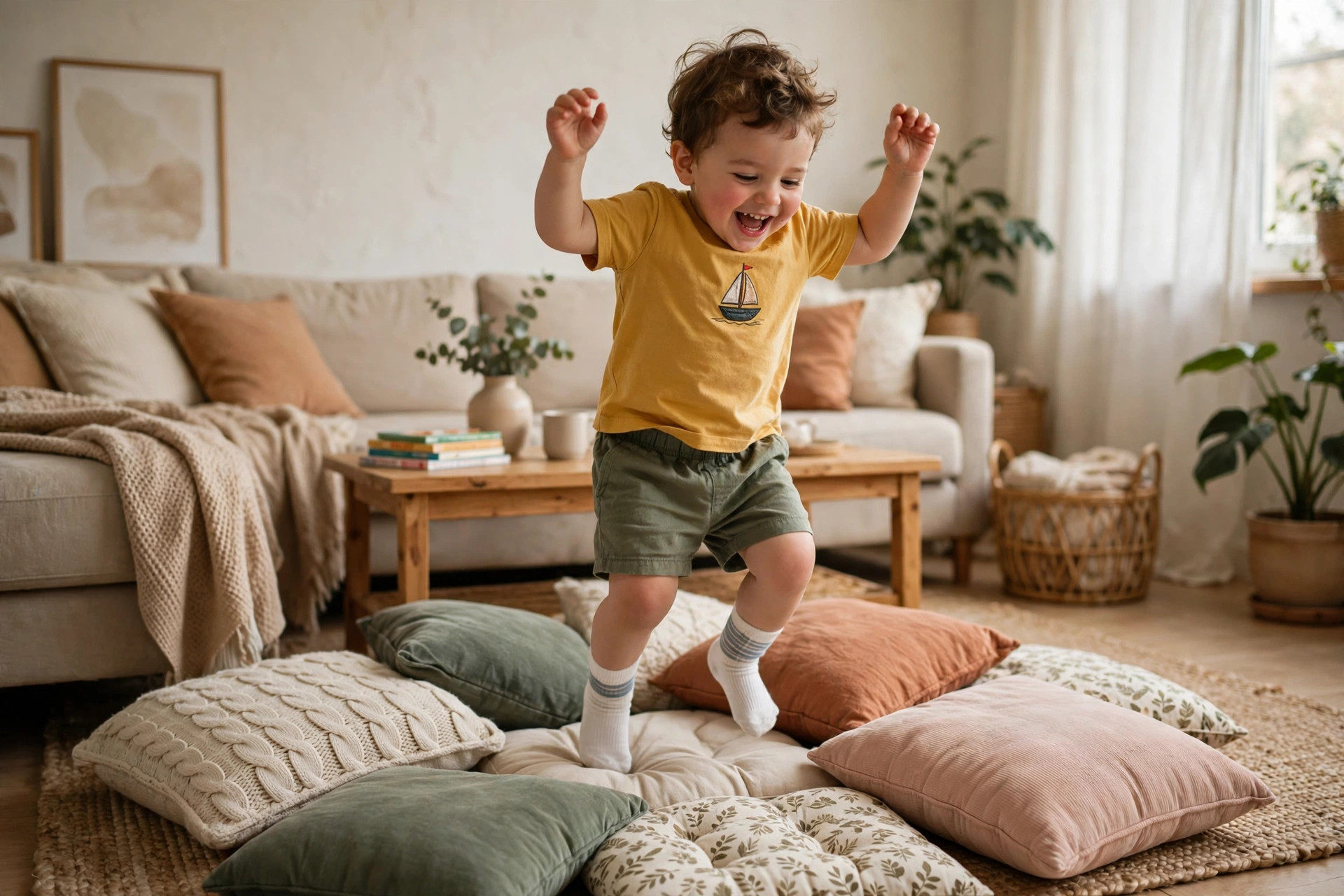
Lay cushions close together on the floor and let your toddler step, jump, and crawl across them, with your hand ready for the big steps. It is a climbing frame that fits in a living room, and it builds balance and courage at the same time. Keep the cushions low and close, because a two-year-old should step, not climb and fall. Age 2: cushions flat on the floor, and you hold their hand for every step. Age 3 to 4: a small pile to climb over, and they cross it alone. Age 5: they build the course themselves and tell you the rules. Best moment: after a long car ride or a long morning inside, when the body needs to move before the mind can settle.
9. Laundry basket ball
Put a laundry basket on the floor and throw soft items into it: rolled socks, soft balls, stuffed animals. It is the simplest throwing game there is, and it builds aim, arm strength, and turn taking, because you throw one, they throw one, and the basket fills up together. Use soft things only, and keep the basket close, because a two-year-old throws hard and far. Age 2: basket two steps away, and you hand them the ball. Age 3 to 4: basket further away, and they count the baskets they make. Age 5: they move the basket and set the distance themselves. Best moment: while you fold laundry, because the game uses the same basket and the same socks, and the chore becomes the play.
10. Pots and spoons band
A pot, a wooden spoon, and a few plastic containers make a drum kit, and a two-year-old with a drum is the happiest musician alive. Tap a simple rhythm and let them echo it, because echoing a rhythm is pattern sense, which is early maths in disguise. Keep the band short, five minutes, and end it yourself, because a band that stops while it is still fun gets played again tomorrow. Age 2: one pot, one spoon, and you tap together. Age 3 to 4: two pots, and they echo your rhythm back. Age 5: they lead the band and tell you when to play loud and when to play soft. Best moment: the ten minutes before lunch, when the kitchen is busy and the band is the entertainment.
Quiet hands, calm focus. These five slow the day down. They use the hands, not the feet, and they work best after the movement games, when the energy is spent and the focus is ready. Each one takes five to ten minutes, and each one ends while it is still fun, because a quiet activity that drags on becomes a loud one.
11. Water pouring
Two small cups, a jug, and a tray. Your toddler pours water from one cup to the other, spills some, and pours it again. It is the calmest activity on this page, and it builds hand control and focus better than any worksheet, because the water gives instant feedback: pour too fast and it spills, pour slow and it lands. Stay beside them the whole time, and empty the water when you are done. Age 2: two cups and a small jug, and you hold the tray steady. Age 3 to 4: pour into a cup with a line drawn on it, and stop at the line. Age 5: pour and count the scoops, and they pour for the plants after. Best moment: the hour before bed, when the day needs slowing down and the water does the slowing.
12. Playdough squeeze
Squeezing, rolling, and poking playdough builds hand strength, and hand strength is what makes drawing, cutting, and buttoning easier later. Roll a snake, pinch bits off, press it flat, and start again. Add a rolling pin or cookie cutters, or make your own dough with flour, salt, and water. Keep the pieces big, because small pieces get eaten at two. Age 2: squeeze and poke, and the snake is the whole game. Age 3 to 4: roll snakes and balls, and cut shapes with a cutter. Age 5: they build animals and tell you what each one is doing. Best moment: a quiet morning, when the house is still and the hands want work.
13. Sticker scenes
Draw a simple background on a piece of paper, a sky, a road, a tree, and let your toddler stick characters onto it. Peeling stickers is fine motor work in disguise, and placing them on a scene is the first step toward telling a story with pictures. Use big stickers, because small ones frustrate a two-year-old, and let them place the stickers wherever they want, because the scene is theirs. Age 2: five big stickers and one background, and you peel the first two. Age 3 to 4: they peel alone and tell you who each sticker is. Age 5: they draw the background themselves and the stickers become the characters in their story. Best moment: the waiting minutes before an appointment, when a sticker book is the only toy that fits in a bag.
14. Stack and knock down
Build a small tower of blocks or stacking cups together, then let your toddler knock it over and rebuild. The knocking down is usually half the fun, and the rebuilding is the learning, because a tower that falls teaches balance, size, and patience in a way a tower that stands never does. Keep the tower low, five blocks, because a tall tower falls on small hands. Age 2: three blocks, and you build together. Age 3 to 4: five blocks, and they build alone. Age 5: they build the tallest tower they can, and they count the blocks as they go. Best moment: the ten minutes after a nap, when the hands are rested and the tower is the first thing they reach for.
15. Blanket fort books
Build a low fort with a blanket over two chairs, put a book and a soft toy inside, and read together in the dark. A blanket fort is the calmest place in the house, because the small dark space feels safe, and a book read inside a fort is a book a toddler remembers. Keep the fort low and open on one side, so your toddler can leave whenever they want. Age 2: you build the fort and read one short book inside. Age 3 to 4: they help build it and pick the book. Age 5: they build it alone and read the story back to you from memory. Best moment: the last book of the day, when the fort is the signal that the day is ending.
When the quiet ones end, the day still needs a plan
The No-Screen Toddler Rescue Kit sorts 115 activities by the moment you need them, including quiet play for tired afternoons and calm wind-downs for the evening, so the hours after these fifteen are covered too. 89 pages, 28 printable activity cards, ages 2 to 5.
Instant download. Print it once, use it every day.
Pretend play and real jobs. Two-year-olds copy adults, and these five let them do it properly. The best pretend games at two are not stories with a plot, they are jobs with a tool: a spoon, a cup, a cloth, a box. Give them the real job, in a small size, and the pretending takes care of itself.
16. Kitchen helper
Washing vegetables, tearing lettuce, or stirring a bowl feels like real work, and your toddler loves it because it is real work, not a game about work. Give them a bowl of water and a vegetable to wash, or a spoon and an empty bowl to stir, and let them work beside you at the counter. It builds hand control and pride at the same time, and it keeps them beside you instead of under your feet. Age 2: wash one vegetable in a bowl, and you hold the bowl. Age 3 to 4: tear lettuce and stir the bowl, and they set the table with the spoons. Age 5: they wash, tear, and stir, and they tell you what is for dinner. Best moment: while you cook, because the helper is the only activity that makes dinner faster instead of slower.
17. Pretend tea party
Cups, a teapot, and a toy audience. Pour, serve, sip, repeat. It is the easiest pretend game at two, because pouring and serving are the whole game, and there is no story to remember and no lines to say. Let your toddler serve the teddy first, then you, then themselves, because the order is the ritual, and the ritual is what makes it feel real. Age 2: pour and sip, and the teddy is the only guest. Age 3 to 4: they serve three guests in order, and the teddy asks for more. Age 5: they invent the menu and tell you what each guest ordered. Best moment: a quiet afternoon, when the tea party is the whole event and the whole event is enough.
18. Doll care
Feed the doll, dress the doll, put the doll to bed, and rock it to sleep. Doll care is the first caring game, and it teaches a two-year-old the routines they live themselves: eat, dress, sleep. Use a doll with clothes that are easy to pull on and off, because a doll that will not dress frustrates a two-year-old fast. Age 2: feed the doll and rock it, and you do the dressing. Age 3 to 4: they dress the doll and put it to bed in the right order. Age 5: they invent the doll's day, and the doll has a schedule, a doctor, and a favorite food. Best moment: the hour before bed, when the doll's bedtime is the rehearsal for theirs.
19. Cardboard box
A cardboard box is a car, a house, a boat, and a hat, in that order, and it is the cheapest toy on this page because it costs nothing. Cut a door and a window, or leave it plain, and let your toddler decide what it is today. The box works because it is big enough to sit in, which makes the pretending physical, and a two-year-old believes a box they can sit in far more than a toy they can only hold. Age 2: sit in the box and drive, and you push it gently. Age 3 to 4: they decorate the box and tell you what it is. Age 5: they build the box into a shop and sell you things from it. Best moment: a rainy day, when the box is the whole outing and the outing never leaves the living room.
20. Cupboard grocery job
Give your toddler one thing to find in the cupboard: can you find the bananas, can you find the red tin. Finding one thing and bringing it back is a job, a game, and a language lesson in one, because the finding needs listening, the carrying needs balance, and the bringing back needs pride. Keep the job to one item, and keep the item low and safe, because a two-year-old who climbs for a job is a two-year-old who falls. Age 2: one item, low down, and you point to the shelf. Age 3 to 4: two items, and they carry both back at once. Age 5: they find the item, check the list, and tell you what is missing. Best moment: while you unpack the shopping, because the job uses the real bags and the real cupboard, and the groceries get put away twice as fast.
The one-activity-three-ways method
Twenty ideas are plenty, but one idea used three ways lasts a whole week. The trick is to take a single setup and make it easier, then the same, then harder, so your toddler meets the same activity three times and it feels new every time. Pouring is the clearest example. Easy way: pour water between two cups on a tray, and the only rule is to pour slow. Same way, the next day: pour into a cup with a line drawn on it, and stop at the line. Harder way, later in the week: pour and count the scoops, one, two, three, and stop at three. One setup, three days, three skills, and the tray never moves. Color hunt works the same way. Easy: find everything red. Same: find everything red, then everything blue. Harder: find everything red, sort it by size, and count it. Stacking works the same way too. Easy: stack three blocks and knock them down. Same: stack five blocks and knock them down. Harder: stack five blocks, count them as you go, and name the color of each one. The method matters because a toddler who meets the same activity three times learns more than a toddler who meets three activities once. Repetition is the teaching, and the small change is what keeps the repetition interesting.
The 2-year-old day at home
A full day at home with a two-year-old is not twenty different ideas. It is five or six short sessions, spaced across the day, with the wild ones and the calm ones taking turns. Parents also search for at home activities for 2 year olds, which is the same idea in different words, and this page answers both. The table below is the whole day in one look: the moment, the activity, and why it fits there.
| Moment | Activity | Why it fits |
|---|---|---|
| Morning, after breakfast | Color hunt, then shape posting box | The mind is fresh and the hands want work, so start with learning while the focus is highest. |
| Midday, before lunch | Kitchen helper, then pretend tea party | Your toddler works beside you while you cook, and the tea party keeps them at the table after. |
| After the nap | Stack and knock down, then water pouring | The hands are rested and the body is still slow, so start calm and let the energy build. |
| Witching hour, 4 to 6 PM | Dance freeze, then animal walks | The energy is highest and the patience is lowest, so spend the energy first and talk later. |
| Rainy afternoon | Cushion course, then cardboard box | Going outside is not an option, so the living room becomes the playground and the box becomes the outing. |
| Before bed | Blanket fort books, then doll care | The day needs slowing down, and the fort and the doll's bedtime are the rehearsal for theirs. |
Repeat the favorites. A two-year-old who does the color hunt every morning for a week learns more than a two-year-old who does six different activities once each. One new activity a day is the maximum worth trying, and most days, no new activity at all is the right call.
The day plan is the start, the kit is the whole week
The No-Screen Toddler Rescue Kit sorts 115 activities by the moment you need them, including morning, witching hour, rainy day, and bedtime, so every slot in this day plan has a backup. 89 pages, 28 printable activity cards, ages 2 to 5.
Instant download. Print it once, use it every day.
Safety rules for 2-year-olds that never bend
Two is the age when a toddler puts everything in their mouth, climbs everything in the room, and drinks from every cup they can reach. Five rules cover almost every risk on this page, and they never bend, not for a quick activity and not for a good photo. First, the toilet paper tube test: if an object fits through a toilet paper tube, it does not belong in a two-year-old's hands. Small beads, buttons, coins, and small pasta are all out, which is why this page uses big shapes, big cups, and big stickers only. Second, water always has an adult beside it, hands close, and the tub or bowl is emptied the moment you are done. Third, paint and playdough are washable and taste-safe, because a two-year-old will taste both, and the activity ends the moment they do it on purpose. Fourth, cushions stay low and close, because a two-year-old should step, not climb and fall, and a cushion course is a stepping course, not a climbing frame. Fifth, screens stay small: the World Health Organization says no more than one hour of screen time a day at this age, and less is better, so the short play bursts on this page are the easiest way to fill the gaps when a screen is tempting. If an activity ever feels unsafe, stop it. A stopped activity teaches a toddler that stopping is allowed, and that lesson is worth more than the activity.
When nothing works
Some days, nothing works. Your toddler says no to every activity, wanders off after two minutes, and melts down over a cup that is the wrong color. All three are normal at two, and none of them mean the activity was wrong. When they wander off, let them go. They may come back with a new idea, and a toddler who leaves and returns is learning more than a toddler who stays and sulks. When they say no to everything, it is usually about control, not the activity. Offer two choices, dance or fort, and let them pick, because a choice is control in a small size. When they melt down, make it easier: fewer pieces, a bigger cup, a helping hand, or stop entirely and switch to something physical, like dancing or a walk to the mailbox. Movement resets a two-year-old faster than talking does. And when the whole day is hard, drop the plan and do one thing: water pouring, a dance freeze, or a blanket fort book. One good activity, done well, is a good day, and tomorrow the rest of the page will still be here. If the hard hour is the same hour every day, our toddler witching hour activities guide is built for exactly that hour, and our no prep toddler activities page is built for the days when you have nothing left to set up.
Questions parents ask
What activities can a 2-year-old do at home?
The best activities for 2 year olds at home to start with are water pouring, stacking and knocking down blocks, a color hunt, a dance freeze game, and a pretend tea party. Each one takes five to ten minutes and uses things you already own. Start with one activity a day, repeat favorites instead of hunting for new ones, and add a second activity only when the first one starts to feel easy.
How long should a 2-year-old play with one activity?
Five to ten minutes is normal, and two minutes is a win, not a failure. Two-year-olds play in short bursts and come back to the same activity again later, and repetition matters more than length. If your toddler leaves after two minutes, let them go and try again in an hour. A short happy session teaches more than a long forced one.
What are the best learning activities for a 2-year-old at home?
The best educational activities for 2 year olds at home are the ones that hide learning inside play: count the stairs as you climb, name colors during a laundry sort, post shapes through a box, and stretch one word into two during a naming game. No flashcards and no apps. Learning at two happens through talking, touching, and repeating, and the kitchen, the laundry basket, and the stairs are the classroom.
How do I keep my 2-year-old busy while I cook?
Give them a job at your feet: washing vegetables in a bowl of water, stirring an empty pot with a wooden spoon, or sorting clean socks on the floor. Water pouring at the sink and a pots and spoons band work too, because your toddler is beside you and part of the real work. The rule is simple: the activity stays within arm's reach and uses the same things you are using.
How much screen time is okay for a 2-year-old?
The World Health Organization says no more than one hour of screen time a day at this age, and less is better. Short play bursts are the easiest way to fill the gaps when a screen is tempting: one five-minute activity, then a movement game, then a quiet one. If the screen has been on, switch it off and offer one activity, not a lecture about screens.
What if my 2-year-old will not play alone?
That is normal at two. Independent play builds minute by minute over weeks, starting with four good minutes while you sit in the same room. Sit nearby, narrate what your toddler does, and step back a little each week. Our independent activities for 2 year olds guide walks through the whole system, from four minutes to fifteen, without leaving your toddler alone in a room.
How many activities does a 2-year-old need in a day?
Five or six short sessions spread across the day are plenty, and repeats count. One new activity a day is the maximum worth trying, because a toddler who knows five activities well plays more than a toddler who half knows twenty. Mix the day: two learning activities, two movement games, one quiet one, and one pretend game, and let the favorites repeat.
Sources and further reading
Two guides shaped this page. Otter Play Ideas lists 25 activities for 2 year olds, at home and out, with the same short-burst rule this page uses: if a game ends after two minutes, that is normal. Bright Play Days covers toddler learning activities at home, 30 ideas for age two, with the same no-flashcard rule: learning happens through play, talk, and repetition. Both are worth reading, and both agree with the rule this page is built on: five to ten minutes, things you already own, and repetition over novelty.
Related guides
The two-year-old year has three pages on this site, and this one is the middle of the three. Independent activities for 2 year olds teaches your toddler to play alone, minute by minute, starting with four good minutes. Quiet time activities for 2 year olds is the nap replacement, the daily rest period that holds the day together when the nap starts to wobble. When your toddler turns three, activities for 3 year olds at home picks up where this page ends, and activities for 4 year olds at home takes over at four. For the skills underneath these activities, sensory activities for toddlers at home covers the senses, fine motor activities for toddlers at home covers the hands, and indoor gross motor activities for toddlers at home covers the big movement. The home for all of it is our screen-free toddler activities hub, and the days when you have nothing left to set up belong to no prep toddler activities. For the moments that need a song, Christmas songs for toddlers has fifteen with actions, and for the hard hour, toddler witching hour activities is waiting.