
Activities for 5 Year Olds at Home: 20 Easy Ideas for After School and Weekends
Updated November 10, 2026
Activities for 5 year olds at home work best in the after-school hours, when your child walks in the door tired, hungry, and full of things to tell you. Five is a big year. Most children start kindergarten, count to 10, pay attention for 5 to 10 minutes during an activity, and keep a conversation going with more than three back-and-forth exchanges. They want games with simple rules, projects with a clear result, and a real job to do. Every idea on this page is built for that child, sorted into four groups of five: science experiments, early reading and writing through play, numbers and logic games, and big projects with real helping. Every idea uses things already in your house, takes 15 to 30 minutes, and comes with the version for a child who just turned 5, the version for a solid 5-year-old, and the stretch for a child almost 6 and heading to first grade. The heart of this page is the after-school 5-year-old, the one who has spent the day at school and now wants to make something, test something, and show it off.
Activities for 5 year olds: what changes at five
Five is the year the baby years end and the school years begin. Here is what changes, in plain words, and why the ideas below are built the way they are.
| What changes | What it means for play |
|---|---|
| School starts | Your child spends the day following rules, taking turns, and sitting still. Home play should feel like the opposite: free, physical, and chosen by them, not assigned. |
| Attention stretches to 5 to 10 minutes | Most 5-year-olds can pay attention for 5 to 10 minutes during an activity. Plan for 15 minutes, let them stretch it, and stop while they are still happy. |
| Counting to 10 | Most 5-year-olds can count to 10. Games that count, sort, and measure are now real games, not just noise. |
| Conversations with 3+ exchanges | Your child can keep a conversation going with more than three back-and-forth exchanges. Ask questions, listen to the answers, and ask another one. |
| Games with rules | A 5-year-old can follow simple rules, take turns, and understand winning and losing. Board games, card games, and team games all work now. |
| Making things with a clear result | Five-year-olds like to make something and show it off. Keep a spot on the fridge ready, and let the result stay up for a week. |
Read the table as a map, not a test. A child who counts to 8 and not 10 is fine. A child who cannot sit still for 5 minutes is fine. The ideas below are built on this map, one skill per idea, so the play you do after school is the same play school is building on. For the younger ages, the activities for 4 year olds at home page has preschool readiness, and the activities for 3 year olds at home page has the age before that.
20 activities for 5 year olds at home for every kind of day
Every one of these activities for 5 year olds at home is built for the after-school hours and the weekend, when your child has energy to spend and a story to tell. Pick one group for the afternoon and ignore the rest until you need them. Repeat the favorite tomorrow instead of hunting for a new one. A 5-year-old learns more from the third time they build the same marble run than from the first time they try ten new things.
Science experiments
Science at five is not a lesson. It is a question, a guess, and a wow moment, all in ten minutes, using things from the kitchen. Every experiment here ends with something your child can see, and every one of them is safe with you sitting next to them.

1. Baking soda volcano
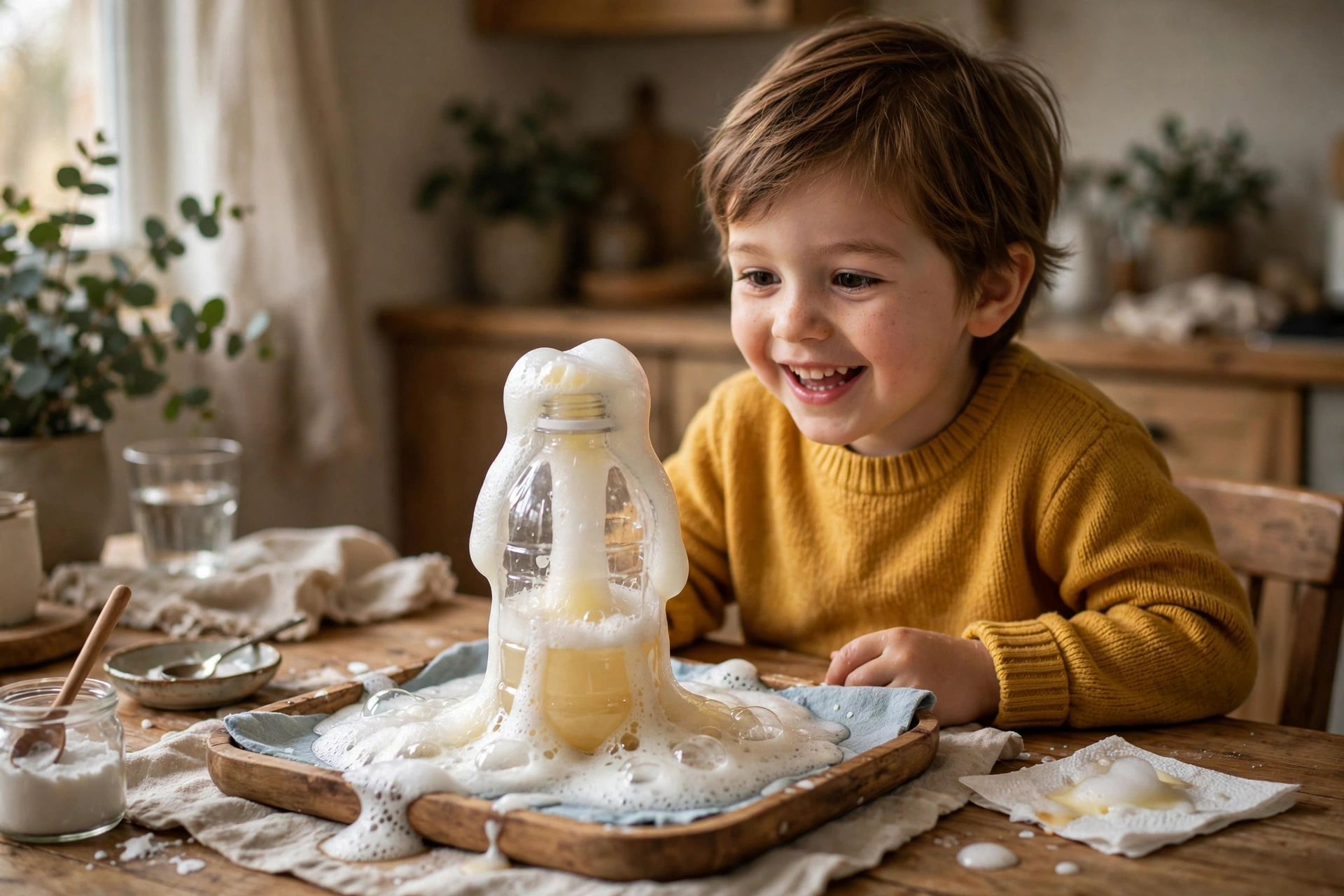
A small plastic bottle on a tray, a few spoonfuls of baking soda inside, and vinegar poured in slowly. The fizz erupts, and your child watches a chemical reaction happen in front of them. Just turned 5: you pour the vinegar, they watch the fizz and shout when it erupts. 5 years old: they pour the vinegar themselves, slowly, and they tell you what will happen before it happens. Almost 6: they add food coloring to the vinegar first, and they explain to you why the bubbles rise.
2. Sink or float
A tub of water and a pile of household objects: a spoon, a cork, a rock, a leaf, a toy car, an orange. Your child guesses sink or float for each one, tests it, and records the answer. Just turned 5: three objects, and they guess by pointing. 5 years old: ten objects, and they write S or F on a piece of paper for each one. Almost 6: they sort the results into two columns and tell you the rule: heavy things sink, light things float, except when they do not.
3. Magnet hunt
A fridge magnet on a string, dragged around the house to find what sticks. Your child tests the fridge, the door handle, the table leg, the coins, the keys, and the toys, and sorts them into sticks and does not stick. Just turned 5: you hold the magnet, they point at what to test. 5 years old: they hold the magnet and test ten things on their own. Almost 6: they predict before they test, and they explain why the magnet sticks to the fridge but not to the wooden table.
4. Color mixing
Three clear cups of water, red, yellow, and blue food coloring, and three empty cups. Your child mixes red and yellow to make orange, blue and yellow to make green, and red and blue to make purple. Just turned 5: one mix, red and yellow, and they watch the orange appear. 5 years old: all three mixes, and they name each new color. Almost 6: they invent a new color by mixing two mixes together, and they give it a name.
5. Growing seeds in a jar
A clear jar, a damp paper towel, and a few bean seeds pressed against the glass. Put the jar on a sunny windowsill and watch the seeds sprout over the week. Just turned 5: you set up the jar, they check it every morning. 5 years old: they set it up themselves and draw what they see each day. Almost 6: they keep a simple record, day 1, day 3, day 5, and they tell you what the plant needs: water, light, and time.
Early reading and writing through play
School teaches reading. Home makes reading fun. These five ideas play with letters and sounds the way a 5-year-old actually learns them: by hunting, building, retelling, rhyming, and making something of their own.
6. Alphabet treasure hunt
Write the letters of the alphabet on small cards and hide them around one room. Your child finds them, one at a time, and says the letter sound as they find each one. Just turned 5: five letters hidden in plain sight, and they find them all. 5 years old: the whole alphabet, and they say the sound for each letter they find. Almost 6: hide the letters in order, A to Z, and they have to find them in order.
7. Build simple words
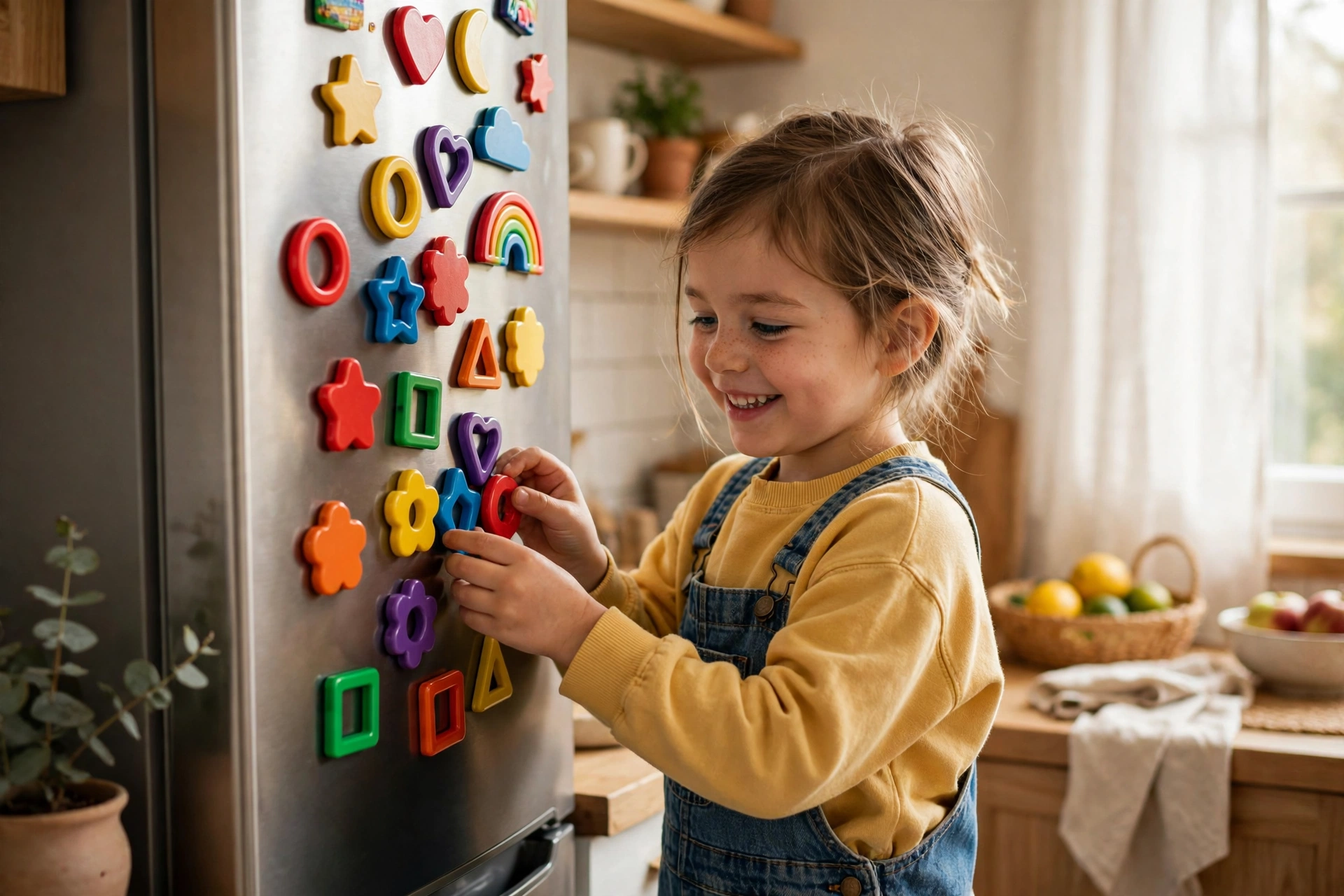
Magnetic letters on the fridge, or letter cards on the table. Your child builds their name, then mum, dad, cat, dog, and sun. Just turned 5: they build their name with you pointing at each letter. 5 years old: they build five simple words on their own. Almost 6: they build a word, you change one letter to make a new word, and they read the new word out loud.
8. Story retelling
Read a favorite picture book together, then close it and ask your child to tell the story back to you, in their own words, with puppets or toys acting it out. Just turned 5: they retell the beginning, and you help with the middle and the end. 5 years old: they retell the whole story, beginning, middle, and end, with the puppets. Almost 6: they change the ending and tell you their version instead.
9. Rhyming game
Say a word, your child says a word that rhymes with it. Cat, hat, bat, sat. Then make silly rhymes together, like the ones in The Gruffalo. Just turned 5: you say the word, they say the rhyme, and you help when they get stuck. 5 years old: they start the rhyme, and you have to keep up. Almost 6: they make up a rhyming joke and tell it to the whole family at dinner.
10. Make your own book
Fold three sheets of paper in half, staple the spine, and let your child draw the pictures and dictate the words. You write the words down exactly as they say them. Just turned 5: three pages, one picture each, and you write the words. 5 years old: six pages with a beginning, a middle, and an end. Almost 6: they write the words themselves, slowly, in big letters, and they read the book to you when it is done.
Twenty ideas are a start, the kit covers the whole year
The No-Screen Toddler Rescue Kit sorts 115 activities by the moment you need them, including quiet time, travel, and rainy days, so the next age up is covered too. 89 pages, 28 printable activity cards, ages 2 to 5.
Instant download. Print it once, use it every day.
Numbers and logic games
A 5-year-old can count to 10, follow a rule, and take a turn. These five ideas turn those skills into games, and the games turn into learning without anyone noticing.
11. Counting to 20 games
A cupcake tin and 20 small objects: buttons, beads, or pasta shapes. Your child counts them into the tin, one per cup, then counts them back out. Just turned 5: count to 10, and they point at each object as they count. 5 years old: count to 20, and they count backwards from 10. Almost 6: count by twos to 20, and they tell you which number comes next without counting from the start.
12. Board games with rules
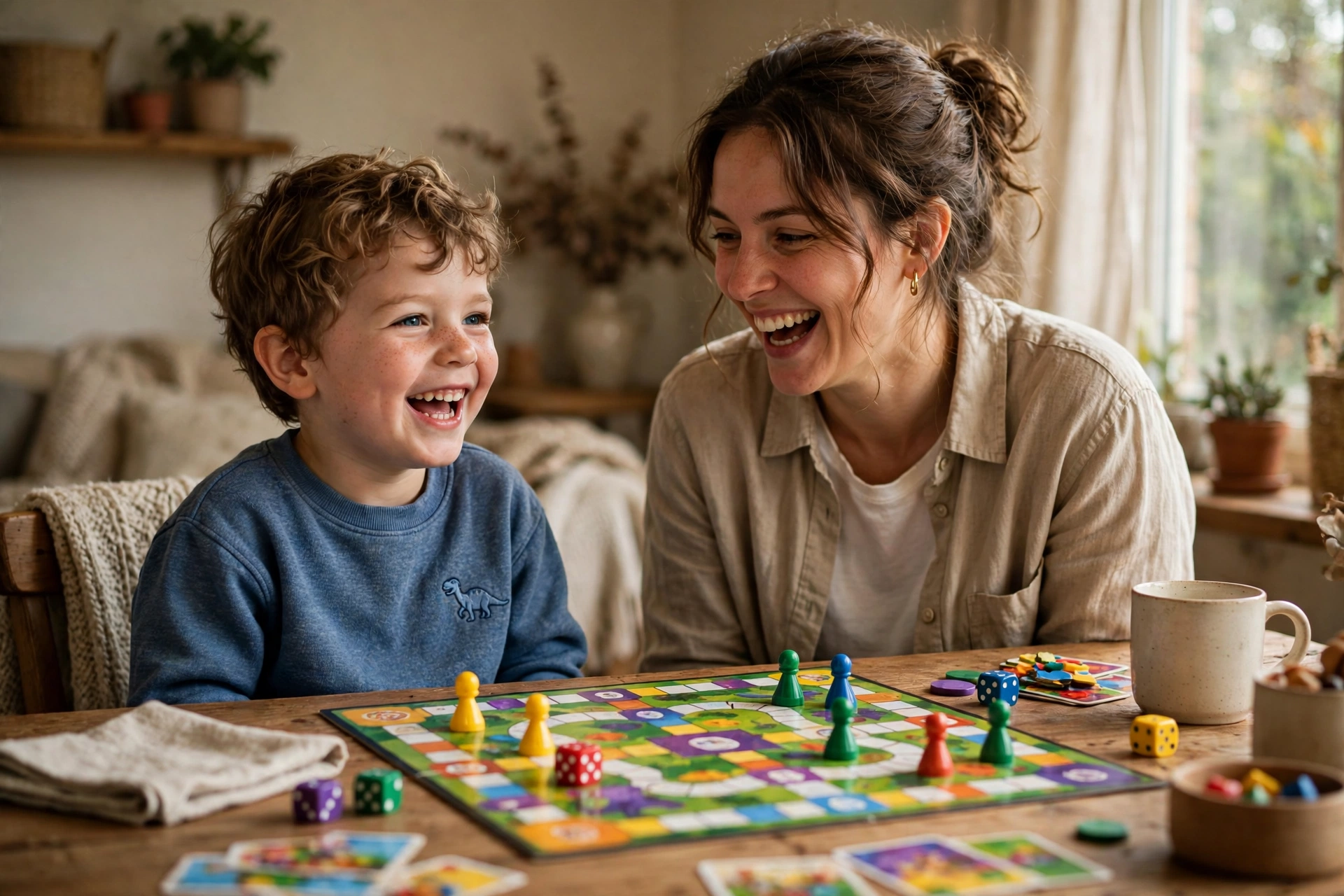
A simple board game with turns, like Snakes and Ladders, or a card game like Go Fish. Your child rolls the dice, counts the spaces, takes their turn, and waits for yours. Just turned 5: you play together as a team against the board. 5 years old: they play on their own, take their turn, and wait for yours. Almost 6: they explain the rules to a younger sibling, and they correct you when you forget a rule.
13. Patterns
Beads, blocks, or clapping. Your child makes a pattern, red blue red blue, and you have to guess what comes next. Just turned 5: a two-color pattern, and they copy it. 5 years old: a three-color pattern, and they make one up for you to copy. Almost 6: a clapping pattern with a pause in it, and they teach it to the family.
14. Measuring while cooking
A recipe that needs measuring: a cup of flour, half a cup of sugar, two spoonfuls of oil. Your child measures, pours, and stirs, and learns what a half means by doing it. Just turned 5: they pour the cup you measured, and they stir. 5 years old: they measure the cup themselves, and they count the spoonfuls. Almost 6: they read the recipe and tell you what to measure next.
15. Treasure hunt with clues
Five clues, written or drawn, each leading to the next, and a small prize at the end. Your child reads or looks at each clue, follows it, and finds the next one. Just turned 5: three picture clues, and you read them together. 5 years old: five written clues, and they read the easy words themselves. Almost 6: they write the clues themselves, hide them for you, and watch you hunt.
Big projects and real helping
Five-year-olds want a real job. These five ideas give them one, and the result stays up on the fridge for a week.
16. Cardboard marble run
Cardboard tubes taped to a wall, a marble dropped in at the top, and a cup at the bottom to catch it. Your child designs the run, tests it, and fixes the parts where the marble gets stuck. Just turned 5: two tubes taped straight down, and they drop the marble in. 5 years old: four tubes with a bend, and they fix the stuck spots themselves. Almost 6: they design the whole run on paper first, then build it, and they time how long the marble takes.
17. Fort building
Blankets, pillows, and chairs. Your child builds a fort, moves their books and toys inside, and reads in it for the rest of the afternoon. Just turned 5: you hold the blanket while they crawl inside. 5 years old: they build the whole fort themselves and invite you in. Almost 6: they build a fort with rooms, a bedroom and a kitchen, and they give you a tour.
18. Cook a simple snack
Sandwiches, fruit salad, or ants on a log. Your child spreads, cuts with a blunt knife, pours, and serves the snack to the family. Just turned 5: they spread the butter and place the filling. 5 years old: they make the whole sandwich and cut it in half. Almost 6: they make the snack for the whole family, and they serve it on a tray.
19. Table-setting helper
Hand your child the napkins and forks and let them set the table for real. One plate, one fork, one napkin, one cup, for every person. Just turned 5: they set their own place, and you set the rest. 5 years old: they set the whole table and count the places. Almost 6: they set the table and tell you if someone is missing a fork.
20. Make a card or gift
A folded card, some crayons, and a message for a grandparent or a teacher. Your child draws the picture, dictates the message, and delivers the card themselves. Just turned 5: they draw the picture, you write the message. 5 years old: they write their name on the card themselves. Almost 6: they write the whole message, slowly, in big letters, and they read it out loud before they give it away.
The next age up is already in the kit
The No-Screen Toddler Rescue Kit gives you 115 screen-free activities for ages 2 to 5, with 28 printable cards, so when your 5-year-old outgrows these ideas, the next ones are already waiting.
Instant download. Print it once, use it every day.
Learning activities for 5 year olds at home
Learning at five looks nothing like school. There are no worksheets, no lessons to sit through, and no apps that promise to teach your child. What a 5-year-old actually learns from is doing, guessing, and finishing, and every idea on this page is built on those three things.
Doing. Your child learns by pouring the vinegar, rolling the dice, and setting the table. The doing is the lesson. If an activity has no doing in it, it is not an activity, it is a lecture.
Guessing. Ask what will happen before it happens. Will it sink or float? What color will red and yellow make? What comes next in the pattern? A guess is a hypothesis, and a 5-year-old who guesses is a scientist.
Finishing. A 5-year-old who finishes a small task, a marble run, a book, a snack, learns that finishing feels good. Break big projects into steps, celebrate the finished step, and let the rest wait for tomorrow.
The four skills to cover are science, reading and writing, numbers and logic, and real helping, and the four groups on this page cover all four. If you do one idea from each group across the week, your child has had a full week of learning, and you have not taught a single lesson. What not to buy: workbooks, flashcards, and apps that promise to teach your child. A baking soda volcano and a board game teach more than any screen ever will. Parents searching for educational activities for a 5 year old will find the same truth here: the learning is in the doing, not in the worksheet. For the age before this one, the activities for 4 year olds at home page has preschool readiness, and the activities for 2 year olds at home page has the same day, three years younger.
The 5-year-old day at home
A 5-year-old does not need a schedule. They need a rhythm: a short window after school, a longer window on the weekend, and free play in between. This table is a rhythm, not a timetable, and it bends around homework, moods, and the weather.
| Time of day | What to do |
|---|---|
| After school, first 30 minutes | Nothing structured. A snack, a drink, and free play. Let them tell you about their day before you ask them to do anything. |
| After school, the play window | One idea from this page, 15 to 30 minutes: a science experiment, a board game, or a project. Then free play until dinner. |
| Before dinner | Real helping: set the table, stir the pot, or make a card. A real job settles a 5-year-old better than another activity. |
| Weekend morning | The big project: the marble run, the fort, or the seeds in a jar. Two hours, no rush, and the result stays up all week. |
| Weekend afternoon | Out and about: the park, the library, or a nature walk. Then one quiet idea, a book or a puzzle, before bed. |
Two short windows on a school day are enough. Each one lasts 15 to 30 minutes of focused play, and the rest of the day is free movement, eating, homework, and following you around the house watching you work. That is not wasted time. Watching you cook, fold laundry, and talk on the phone is how a 5-year-old learns what grown-ups do, and it counts as much as any activity on this page.
One kit, every age from two to five
The No-Screen Toddler Rescue Kit covers the whole toddler years, with 115 screen-free activities for ages 2 to 5, including quiet time, travel, and rainy days, plus 28 printable activity cards.
Instant download. Print it once, use it every day.
Safety rules for 5-year-olds at home
Scissors are real tools now. A 5-year-old can use child-safe scissors, but they still need you nearby. Cut paper, not hair, not clothes, and put the scissors away when the activity ends.
Younger siblings change the rules. If there is a baby or a toddler in the house, small parts, magnets, and beads must stay out of their reach. Play with small parts at the table, and put them away in a high box when you finish.
Kitchen rules. Your child can stir, pour, and spread, but the stove, the oven, and sharp knives are still yours. Stand on a chair to reach the counter, never climb on it.
Screens off at meals and bedtime. Keep recreational screen time short, watch together when you can, and keep screens out of meals and bedtime. A 5-year-old who eats and sleeps without a screen sleeps better and eats better.
Water means watching. A 5-year-old can swim with supervision, but never alone. Bath time, water play, and the pool all happen with you right there, every time.
Out and about. A 5-year-old can walk on the pavement holding your hand, but they still run without looking. Hold hands near roads, and teach them to stop at every kerb.
When play goes wrong
They will not finish anything. That is normal at five. Attention runs 5 to 10 minutes, and a project that takes 30 minutes needs to be broken into steps. Give them one step at a time, celebrate the finished step, and let them walk away and come back. A marble run built over three days counts as finished.
They only want screens. Do not fight the screen, replace it. Put the tablet away, set up one activity from this page, and start it yourself. A 5-year-old who sees you building a marble run will join you. A 5-year-old who is told to stop watching will argue.
They fight over the rules. Five-year-olds care deeply about fairness, and losing can feel like the end of the world. Play short games, let them win sometimes, and lose gracefully yourself so they can copy you. Short games, played often, teach losing better than any lecture.
They get bored in two minutes. Boredom is not a problem to fix, it is a signal. Your child has finished the easy version and needs the harder one. Add a rule, add a step, or add a friend. A bored 5-year-old is a 5-year-old ready for the next version.
A tantrum starts out of nowhere. Stay calm and stay close. Tantrums still happen at five, usually when a child is tired, hungry, or overwhelmed after school. Keep them safe, do not give in to an unsafe demand, and do not lecture in the middle of it. Offer a snack, a cuddle, and a simple activity when it passes.
Frequently Asked Questions
How long should a 5-year-old play one activity?
The CDC says most 5-year-olds can pay attention for 5 to 10 minutes during an activity, and that is the honest starting point. Most ideas on this page run 15 to 30 minutes, because a 5-year-old can return to the same activity after a break and keep going. Plan for 15 minutes, let them stretch it if they want to, and stop while they are still happy. A day with two or three 15-minute windows of play, one after school and one before dinner, gives a 5-year-old more learning than one long forced session.
Is my 5-year-old ready for kindergarten?
Play cannot answer that, and no list of activities can either. Your child's teacher or doctor can, so talk to them if you have questions. What the activities on this page build are the skills that help at school: taking turns, telling a story, holding a crayon properly, following multi-step directions, and finishing a small task. If your child can do most of those, they are building the right things. If you are worried, ask the teacher, not the internet.
How much screen time is OK for a 5-year-old?
Keep recreational screen time short, watch together when you can, and keep screens out of meals and bedtime. That is the whole rule. A 5-year-old who watches one short show with you and then talks about it has learned more than a 5-year-old who watches alone for an hour. The ideas on this page exist for the hours when the screen is off, and they work because a 5-year-old would rather build a marble run or hunt for letters than stare at a wall.
What if my 5-year-old will not finish anything?
That is normal at five. Attention runs 5 to 10 minutes, and a project that takes 30 minutes needs to be broken into steps. Give them one step at a time, celebrate the finished step, and let them walk away and come back. A marble run built over three days counts as finished. Do not force the whole thing in one sitting, and do not call a child lazy for stopping. The finishing skill grows with age, and finishing small things is how it grows.
Should I teach my 5-year-old to read at home?
Do not teach lessons. Play with letters and sounds instead: rhyming games, magnetic letters on the fridge, reading together every day, and letting them retell a story in their own words. School teaches reading. Home makes reading fun, and a child who loves books will learn to read faster than a child who dreads worksheets. If your child asks what a word says, tell them. If they want to write their name, help them. Follow their lead, not a curriculum.
What are the best activities for 5 year olds at home?
The ones with a clear result and a rule to follow. A baking soda volcano that fizzes, an alphabet treasure hunt with letters to find, a board game with turns to take, and a big project like a cardboard marble run that ends with something to show off. A 5-year-old wants to make something and show it to you, so keep a spot on the fridge ready. The four groups on this page cover all of it: science experiments, early reading and writing, numbers and logic, and big projects with real helping.
How do I handle losing and winning in games?
Five-year-olds care deeply about fairness, and losing can feel like the end of the world. Play short games with simple rules, let them win sometimes, and lose gracefully yourself so they can copy you. When they lose, name the feeling: it is hard to lose, and it is fine to feel upset. Then play again. Do not let them win every time, because that teaches nothing, and do not play long games that end in tears. Short games, played often, teach losing better than any lecture.
Sources and further reading
Oxford Owl has fun learning activities for 5 to 6 year olds, with rhyming games, phonic games, memory games, and listening games that build the same skills school is teaching. Read Oxford Owl on fun learning activities for 5 to 6 year olds. For longer projects, KiwiCo has STEAM activities for 5 to 8 year olds to do at home, including sink or float, baking soda boats, color mixing, and growing seeds. Read KiwiCo on activities for 5 to 8 year olds to do at home.
Start with one idea this afternoon, the baking soda volcano or the alphabet treasure hunt, and repeat the favorite tomorrow. That is the whole method. A 5-year-old does not need a new activity every day, they need the same good one, with you next to them, and let activities for 5 year olds at home do the teaching while you watch them learn. For the younger ages, the activities for 4 year olds at home page has preschool readiness, the activities for 3 year olds at home page has the age before that, and the activities for 2 year olds at home page has the same day, three years younger. For the short version of this day, the 15-minute toddler activities page has the quick plans, and the independent play activities for toddlers page has the calm ideas for the day your 5-year-old wants to play alone.